
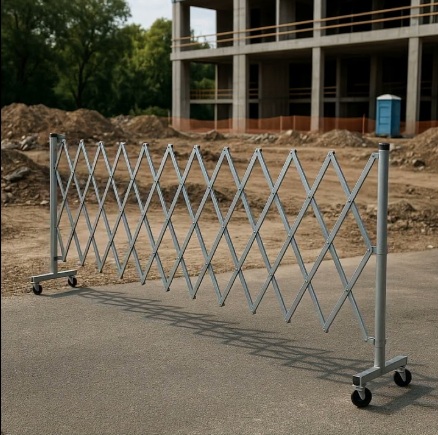
Good temporary safety barriers are more than just a way to mark the edges of an area. Correctly chosen barriers reduce damage, improve traffic, and enhance overall worksite safety. Here are six things to think about when designing a temporary safety barrier:
1. Impact Absorption Capability
If the barriers aren’t strong enough, a car could suddenly stop or fall, seriously hurting someone. Both energy-absorbing components and crumple zones are included in a blockade of superior quality. Their construction allows them to safely absorb and, if necessary, dissipate the force of any physical impact.
In addition, absorption is required in order to lessen the force that is applied to individuals. Rather than coming to a complete and total halt, the system starts to contract in areas that have been specially organised.
2. Compliance With Safety Standards
Certified barriers undergo the most stringent testing possible to guarantee a consistent level of safety. No one can say for sure how this kind of barrier will work in real life if people don’t follow the rules. You can increase the guarantee of its performance by selecting a barrier that has been evaluated for its quality and that satisfies established standards.
A MASH barrier is suitable if site-specific parameters do not require reliable performance. The need for planning and approval of a safe barrier is, however, confirmed by compliance testing for objects that have a higher level of risk for potential harm.
3. Visibility in All Conditions
Both the visibility of barriers and the reaction factor of the driver are significantly impacted by this factor. The barriers, on the other hand, are difficult to spot when it is dark and visibility is poor, with a few notable exceptions.
To get the driver’s attention, use colours that stand out sharply from the background and add reflective elements for nighttime use. Becoming attractive enables the driver to better prepare in advance, thereby reducing the likelihood of unexpected braking and erratic manoeuvring.
4. Modular and Flexible Configuration
Often, temporary work sites move, and barriers that don’t move make it take longer to do things or move things around. When making changes, it is helpful to have the ability to remove, add, or rearrange components. This makes the process more efficient.
Having a structure that is adaptable makes it simpler to quickly respond to the ever-changing requirements of the site. It’s important for short-term and staged projects that the crew can keep working after changes are made without having to worry or talk about them again.
5. Ease of Transport and Installation
Crews are put in danger for no apparent reason through the use of cumbersome or cumbersome systems. Instead of merely focusing on performance, design should elevate the work itself.
Well-designed barriers should minimise the amount of time required for setup and teardown while still ensuring the required level of strength. As a result, the amount of time that personnel are exposed to potentially hazardous environments is decreased.
6. Stability Under Real-World Conditions
Shifting, gaps, or total collapse are signs that the design was not stable enough. Yet without properly functioning barriers, the entire safety system is undermined. Interlocking bases, for example, along with the distribution of weight, help increase stability. This factor makes it possible to align barriers correctly and keep them that way during use.
Where Good Design Becomes Real Protection
Progressive barrier design should consider all the qualities necessary for a successful safety system. Correct implementation of barriers can significantly reduce danger and risk. The proper design can turn temporary barriers from a mere indicator of a danger zone into a reliable life-saving construction.