

For decades, the gaming industry has served as the ultimate testing ground for cutting-edge technology. What began as a niche hobby confined to dimly lit arcades and pixelated home consoles has exploded into a multi-billion-dollar global juggernaut, generating more revenue than the film and music industries combined. Today, gaming is not just about entertainment; it is about pushing the boundaries of what is possible in digital environments, human-computer interaction, and global connectivity.
As we move deeper into the 2020s, the pace of innovation is accelerating at an unprecedented rate. We are witnessing a paradigm shift where the lines between the physical and digital worlds are blurring. From the power of artificial intelligence to the accessibility of cloud streaming, the next generation of digital entertainment promises to be more immersive, personalized, and accessible than ever before. To understand where the industry is heading, we must take a closer look at the specific technological pillars that are currently reshaping the landscape of gaming and redefining the player experience.
The Rise of Cloud Gaming and the Demise of Hardware Limitations
Historically, the quality of a player’s gaming experience was directly tied to the power of their local hardware. If you wanted photorealistic graphics and smooth frame rates, you had to invest heavily in a high-end PC or the latest console generation. Cloud gaming is fundamentally dismantling this barrier to entry. By leveraging remote servers to render and process the game, and then streaming the visual output to the user’s device, cloud technology is democratizing high-fidelity gaming.
The transition toward cloud-based ecosystems is driven by several key advantages:
- Device Agnosticism: Players can access AAA titles on low-end laptops, older smartphones, or smart TVs without needing specialized graphics cards.
- Elimination of Storage Constraints: With games easily surpassing the 100-gigabyte mark, streaming eliminates the need for massive hard drives and tedious download times.
- Seamless Cross-Platform Progression: Players can start a session on their living room TV and seamlessly continue on their mobile device during their morning commute.
The true enabler of this cloud revolution is the widespread rollout of 5G networks and the advancement of edge computing. To make cloud gaming viable, latency—the delay between pressing a button and seeing the action on screen—must be virtually imperceptible. High-speed, high-bandwidth 5G networks ensure that data packets travel back and forth in milliseconds. As this infrastructure becomes ubiquitous, the concept of owning physical gaming hardware may soon feel as outdated as buying a physical DVD. The future points toward a “Netflix of Gaming” model, where access and convenience reign supreme.
Artificial Intelligence: Crafting Living, Breathing Worlds

Artificial Intelligence (AI) has been a part of gaming since the early days of Pac-Man ghosts, but modern AI represents a monumental leap forward. We are moving away from simple, script-based pathfinding toward deep learning algorithms that can create dynamic, unpredictable, and highly personalized gaming environments. AI is no longer just controlling the enemies you fight; it is actively shaping the world you inhabit.
The integration of advanced AI in modern game development manifests in several groundbreaking ways:
- Dynamic Non-Player Characters (NPCs): Utilizing Large Language Models (LLMs), NPCs can now engage in unscripted, natural conversations with players, reacting dynamically to voice inputs and altering their behavior based on the player’s past actions.
- Procedural Content Generation: AI algorithms can generate entire planets, infinite dungeon layouts, and complex quests on the fly, ensuring that no two playthroughs are ever exactly the same.
- Real-Time Difficulty Scaling: Games can monitor a player’s heart rate, stress levels (via peripherals), and in-game performance to dynamically adjust the difficulty, ensuring the player remains in the optimal psychological state of “flow.”
By utilizing these AI-driven mechanics, developers are transforming static digital playgrounds into living, breathing ecosystems. When a game world reacts organically to your specific playstyle, the emotional investment deepens significantly. Furthermore, AI is drastically reducing development times by assisting programmers in generating textures, coding basic interactions, and debugging, allowing human creators to focus on high-level artistic vision. Ultimately, AI guarantees that the future of gaming will be deeply personalized, treating every single player to a bespoke narrative journey.
The Convergence of iGaming and Traditional Video Game Mechanics
As technology blurs the lines between different entertainment sectors, one of the most fascinating trends is the convergence of traditional video game mechanics with the iGaming and casino industry. Modern consumers, particularly Millennials and Generation Z, have grown up with rich narratives, skill trees, and complex progression systems. Consequently, they expect more from their digital entertainment than the simple, repetitive actions that characterized early online betting platforms. To remain relevant, the iGaming sector is undergoing a massive process of “gamification.”
This synthesis of genres is characterized by several innovative features:
- Narrative-Driven Progression: Instead of a basic VIP point system, players embark on quests, choose avatars, and unlock new storylines as they interact with the platform.
- Immersive User Interfaces: The adoption of aesthetics typically found in Massively Multiplayer Online (MMO) or Role-Playing Games (RPGs) creates a more engaging and visually stimulating environment.
- Interactive Reward Systems: The implementation of “Loot Boxes” or “Open Case” mechanics turns the act of receiving a bonus into a thrilling mini-game of its own.
A prime example of this industry-wide evolution can be observed in platforms like Wincraft Casino, which has built its entire infrastructure around the concept of gamification. Rather than presenting a sterile grid of games, the platform utilizes an MMO-inspired design that transforms a standard session into a comprehensive digital adventure. By integrating elements like the Open Case system, players experience the same psychological thrill of unboxing digital loot that is wildly popular in traditional eSports and video games. This blending of worlds proves that the future of digital platforms lies in creating holistic, engaging ecosystems. When users feel they are part of a larger narrative or a progressing journey, their relationship with the platform evolves from simple transactional interactions to deep, sustained engagement.
Virtual and Augmented Reality: Stepping Inside the Screen
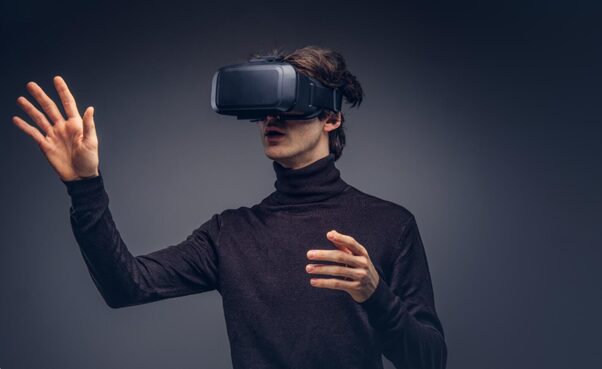
For years, Virtual Reality (VR) and Augmented Reality (AR) were viewed as expensive gimmicks—fun for a quick tech demo, but lacking the depth for sustained, mainstream gaming. However, recent advancements in optics, processing power, and spatial tracking have propelled VR and AR from the fringes to the forefront of the industry’s future. We are transitioning from looking at a screen to stepping inside the environment.
The current wave of VR and AR innovation is characterized by the following technological leaps:
- Advanced Haptic Feedback: Wearable technology, such as haptic vests and gloves, allows players to physically feel the virtual environment—from the recoil of a digital weapon to the sensation of falling rain.
- Spatial Audio Technology: 3D soundscapes trick the human brain into pinpointing exactly where a sound is coming from in a 360-degree radius, drastically enhancing the feeling of presence.
- Mixed Reality Integration: AR headsets are increasingly capable of mapping a user’s physical living room and overlaying digital game elements seamlessly onto their real-world furniture.
With the introduction of devices like the Apple Vision Pro and the Meta Quest series, the concept of “spatial computing” is becoming a reality. Games built for these platforms do not just offer a novel way to play; they offer a profound psychological immersion. In horror games, the terror is visceral because the brain genuinely perceives the threat as physically present. In puzzle and exploration games, the sense of scale and wonder is unmatched. As headsets become lighter, cheaper, and wireless, VR and AR will cease to be an alternative way to game and will instead become the definitive standard for immersive digital experiences.
The Metaverse and the Evolution of Social Gaming
Gaming has fundamentally transformed from a solitary activity into a dominant form of global social interaction. In the modern era, games are no longer just software you play to beat a high score; they are digital “third places”—virtual community hubs where people gather to socialize, attend events, and build relationships. This shift is laying the groundwork for the much-discussed Metaverse.
The social evolution of gaming relies on several structural changes:
- Virtual Events and Concerts: Platforms like Fortnite and Roblox regularly host massive, live virtual concerts featuring real-world artists, drawing millions of concurrent attendees.
- User-Generated Content (UGC): Giving players the tools to build their own game modes, worlds, and digital assets fosters a sense of ownership and community investment.
- Persistent Digital Identities: Players are investing heavily in digital fashion and avatars, representing a shift where one’s digital identity is treated with as much importance as their physical one.
This communal aspect of gaming has completely redefined how developers approach game design. A successful title today must provide robust communication tools, communal spaces, and cooperative mechanics. Furthermore, the integration of blockchain technology and Web3 concepts is beginning to introduce decentralized economies within these virtual spaces. By allowing players to truly own, trade, and sell their in-game assets via smart contracts, games are evolving into functioning micro-economies. While the implementation of these technologies remains a subject of intense debate, the underlying desire for true digital ownership and communal interaction is undeniably shaping the trajectory of the industry.
Conclusion: A Boundless Digital Horizon
The future of gaming is not a single, isolated technological breakthrough; it is the culmination of various disciplines converging to create something entirely new. Cloud computing is destroying the barriers to entry, artificial intelligence is breathing life into digital worlds, and spatial computing is pulling us directly into the action. Meanwhile, the gamification of adjacent industries, such as iGaming, proves that the psychological mechanics of video games are universally effective at driving human engagement.
As we look ahead, it is clear that gaming is no longer just a subculture of the entertainment industry—it is the tip of the spear for human-computer interaction. The technologies being pioneered today to make games more immersive and engaging will eventually filter down into how we work, learn, and communicate. The digital horizon is boundless, and for gamers and tech enthusiasts alike, the most exciting level is always the next one.