
If you have just been involved in a wreck on I-77 or a busy Mooresville intersection, your first priority is to secure the scene and document every detail before evidence disappears. North Carolina is a contributory negligence state, meaning even a small mistake in how you handle the immediate aftermath can jeopardize your ability to recover any compensation at all.
There are over 700 traffic accidents on a typical day across the state, and many of these occur in the high-traffic corridors of Statesville and Mooresville, where I-77 and I-40 converge. This volume of traffic means local law enforcement and emergency services are prepared to respond, but they require your cooperation to create an accurate record.
Immediate Safety and Legal Obligations
Your legal duty begins the moment the vehicles stop moving. North Carolina law requires you to stop at the scene of any accident resulting in injury or property damage, as fleeing can result in serious hit-and-run charges regardless of who caused the crash.
If the vehicles are operable and there are no serious injuries, move them to the shoulder to prevent secondary collisions. Many drivers mistakenly believe they must leave cars exactly where they struck to preserve evidence, but blocking a lane on a highway like US-21 creates a lethal hazard for other motorists. Once you are in a safe position, check yourself and your passengers for injuries that might be masked by the effects of adrenaline.
Call 911 immediately to report the location and any medical needs. Even in a seemingly minor “fender bender,” a police report is the only objective foundation for an insurance claim. In Mooresville, the Mooresville Police Department typically handles city limits, while the State Highway Patrol often manages wrecks on major interstates and rural county roads.
Capturing Vital Evidence at the Scene
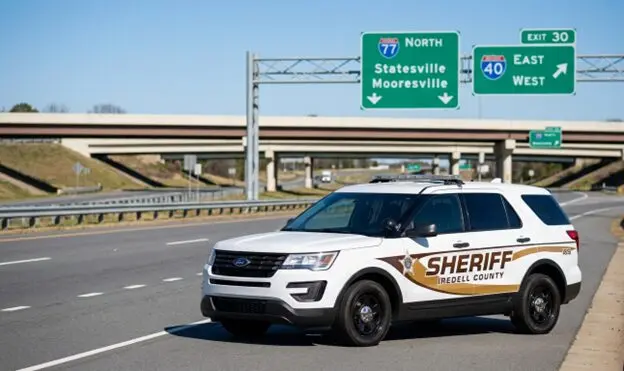
The moments following a crash are chaotic, but this is the only time you will have access to the raw evidence of the event. While waiting for the Iredell County Sheriff or State Trooper to arrive, use your phone to create a digital trail that insurance adjusters cannot ignore.
Take wide-angle photos of the entire scene, including skid marks, broken glass, and the positioning of all vehicles relative to traffic signs or signals. Then, move in for close-ups of the specific damage to each car. It is equally important to photograph the surrounding environment; weather conditions, obscured stop signs, or malfunctioning lights can all be contributing factors.
Collecting contact information is your next hurdle. Beyond the other driver’s name and insurance details, look for neutral third parties who saw what happened.
The following items are essential to gather before leaving the scene:
- Full names and phone numbers of all witnesses
- The badge number and name of the responding officer
- Clear photos of the other driver’s license and insurance card
Avoid discussing the mechanics of the crash or admitting fault to the other driver. Phrases like “I’m sorry” are often twisted by insurance companies to imply legal liability. Stick to the facts when speaking with the officer, as their notes will form the basis of the official crash report.
Medical Evaluation and Insurance Notification
Adrenaline is a powerful natural painkiller that can hide the symptoms of whiplash, internal bruising, or concussions for hours or even days. Delaying medical treatment gives insurance adjusters an opening to claim your injuries were not caused by the wreck or that you failed to mitigate your damages.
Visit an urgent care center in Mooresville or the emergency department at Iredell Memorial Hospital as soon as possible. Tell the provider exactly what happened and mention every point of pain, no matter how minor it seems at the time. This creates a medical link between the accident and your physical condition.
You must notify your own insurance carrier that an accident occurred, but be wary of the other driver’s insurer. They may call you within 24 hours asking for a recorded statement. You are under no legal obligation to provide a statement to the opposing company immediately, and doing so without knowing the full extent of your injuries can be a costly mistake.
While you handle the local logistics of your Iredell County claim, you might find that professional guidance makes the difference in a complex case, especially if you need help after Phoenix crash scenarios or similar high-stakes interstate incidents. Legal support from specialists is required to achieve the best outcome, and choosing experts based in the place where the collision occurred is your best bet.
Securing the DMV-349 Crash Report
The most critical document in your recovery process is the official DMV-349 Crash Report, which provides a coded summary of the officer’s findings. This report includes a diagram of the crash and the officer’s opinion on which driver violated traffic laws.
In Iredell County, you can typically pick up a copy of the report a few days after the accident. If the Sheriff’s Office handled the call, visit their records division in Statesville. For Highway Patrol reports, you may need to request them through the NCDMV’s online portal or visit a local license plate agency.
Understanding the codes on this form is difficult for most laypeople, but it is where the “contributing circumstances” are listed. If the officer noted that the other driver was speeding or failed to yield, that is your primary leverage. Conversely, if there is a mistake on this report, you must act quickly to provide documentation that might convince the officer to file a supplemental correction.
Protecting Your Right to Recovery
North Carolina recently updated its insurance requirements to better protect victims. For policies renewed after July 1, 2025, the minimum liability limits have increased to 50/100/50. This means there is more coverage available for your medical bills and car repairs than in previous years, provided you can prove the other driver was 100% at fault.
The strict “all or nothing” rule in our state means that if you are found even 1% responsible for the accident, the other driver’s insurance can legally deny your entire claim. This is why the precision of your initial documentation and the clarity of the police report are so vital.
Keep a dedicated folder for all receipts, medical records, and correspondence related to the wreck. Track your out-of-pocket expenses, including pharmacy visits and lost wages from missed work. These details ensure that when it comes time to settle, you are asking for a figure based on reality rather than an estimate.
Navigating Local Traffic Resources
Staying informed about the specific laws of the road in Mooresville and Statesville can help you avoid future incidents. Local authorities are increasingly focused on distracted driving and equipment violations that lead to avoidable collisions.
For more information on life in Iredell County, keep reading our posts and you’ll soon be up to speed with local news and insights.