
The way people consume content has been changing over the years in correlation with the devices that the majority of users have. For companies that are working on the creation of these products, it is a significant shift in culture, psychology, and the attention economy. In just a few decades, humanity has gone from collectively watching scheduled black-and-white television programs to individually scrolling endlessly through smartphone feeds.
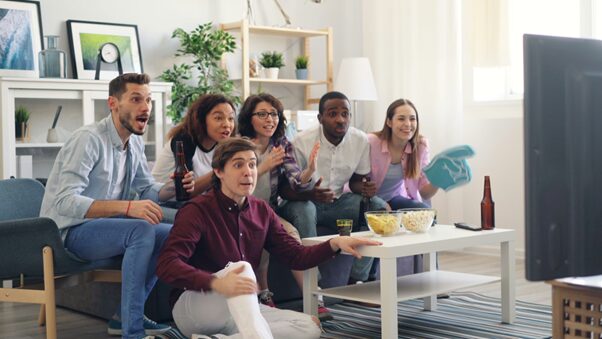
The Blue Light Era: Television as the Center of the Home
In the mid-20th century, television was not just a household appliance, but the sacred center of the living room. It changed the whole daily routine: families gathered for dinner as the evening news began, and children waited for the weekend to watch morning cartoons. It is possible to say that linear broadcasting created a unified information field – the entire country watched the same films and discussed the same shows the next morning at work.
This system had significant limitations. The viewer was a passive consumer, deprived of choice. If you did not like a program, your only recourse was to change the channel to another, equally rigidly structured stream. This fostered a habit of «patient waiting», which has virtually disappeared today.
Technological Breakthrough: Internet and Streaming
The internet was a point of no return for content consumption, because of the high-speed connection to the World Wide Web, there was no more space remaining for the «Prime Time» format. The rise of giants like YouTube and Netflix changed the game. For the first time, viewers gained control over time. Binge-watching became the norm: no longer did you have to wait a week to find out how an episode ends.
Key factors that determined the decline of classic TV:
- Algorithms analyze your preferences and suggest content you are guaranteed to enjoy.
- Ad-free. Paid subscription models free users from intrusive 15-minute blocks.
- Content is no longer confined to a single room in the house.
- The ability to pause, rewind, and leave comments in real time.
The transition to digital formats forced advertisers and content creators to look for new platforms for engaging with audiences. It was during this period that analytics platforms and specialized databases rapidly developed. Resources like WinBD help industry professionals and advanced users navigate the vast array of data associated with multimedia formats and modern broadcast technologies. These tools serve as a bridge between the «old» world of static databases and the «new» world of dynamic content.
Mobile Revolution: Entertainment in Your Pocket
For modern people, the smartphone has become the main screen. There is no need to build the schedule around TV, as the content is available on any smartphone and can be consumed with «micro-pauses»: in line, on public transportation, during lunch. This has led to the rise in popularity of vertical video and short formats. TikTok and Reels on Instagram have proven that 15 seconds is enough to hold attention and evoke emotion.
This change in technologies has also influenced the physiology of perception. The people’s attention has become fragmented, and so-called «clip thinking» has developed. People quickly switch between content, instantly evaluate the quality of content, and are unforgiving of boredom. You can see the difference between the two eras of media consumption by looking at the table.
| Feature | Television Era | Mobile Device Era |
| Consumption Type | Linear (scheduled) | On-demand |
| Primary Device | Stationary TV | Smartphone, tablet |
| Video Format | Horizontal (16:9, 4:3) | Vertical and adaptive |
| Feedback | None | Instant (likes, comments) |
| Barrier to Entry | High (studio required) | Low (only a phone needed) |
It is impossible to find an aspect that has not become different, from technical parameters to social interaction. The modern user has transformed from a spectator into an active participant and even a co-creator of the process.
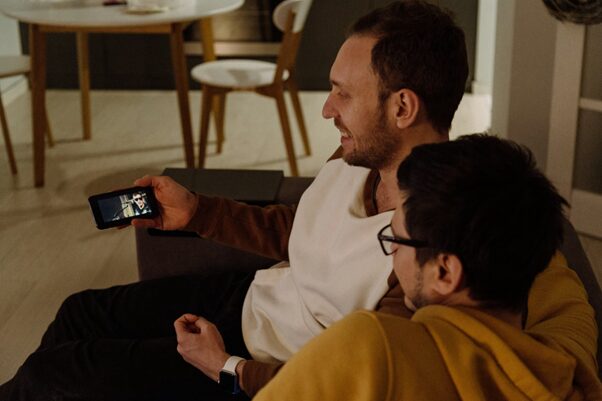
Social Aspect: From General To Specific
While back in the days, TV viewing was a reason for families to gather and share the experience, nowadays, family members live in their own informational bubbles. In one room, one person might watch a documentary on a tablet, another might scroll through social media, and a third might play a mobile game. This creates new challenges for society, but also opens up incredible opportunities for self-education and finding like-minded people around the world.
It is possible to name a few trends that will shape the future of entertainment:
- Cloud gaming. The ability to play demanding games on budget smartphones.
- Artificial intelligence. Unique content is generated for each user in real time.
- Moving away from simple viewing to fully «living» within the content.
Despite the dominance of mobile devices, televisions are not disappearing completely, but are being transformed into huge monitors for home theaters or gaming consoles. The death of old media is nowhere near at the moment, but their deep hybridization is a thing.
The journey from bulky boxes with antennas to super-powerful computers in your pocket took less than a human lifetime. People witnessed how freedom of choice triumphed over the dictatorship of the software grid. Entertainment habits will continue to change, becoming increasingly immersive and personalized, but the human need for stories and visual images will remain unchanged.