
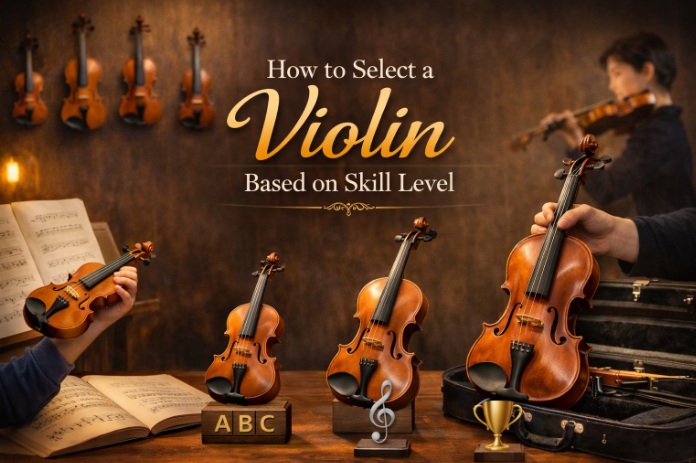
Beginning your journey with the violin is worth the effort. It can make you feel frustrated if you have a high-quality violin that makes it difficult to tune or produces a tone that is screechy. Also, it’s far more motivating to have a violin that will have you practising every day. In this article, you will carefully understand the knowledge to help you with every step of your journey as a violinist.
Choosing Your First Beginner Violin
In the early stages of learning the violin, your attention should be directed towards the instruments that are comfortable to play. A good expectation for your investment would be in a “violin outfit” that can be purchased as a set with a case, a bow for the violin, and a block of rosin. The fittings of the violin should be made of wood and should be of good quality, as plywood would give a very poor sound.
Upgrading to an Intermediate Instrument
When you get comfortable with the basics and start learning different types of shifts and vibrato, you start to feel the limitations of basic instruments. Because violins are hand-carved, they open up a greater tonal range and varied response to your technique as it develops. With the improved wood, free vibrating finish, and improved projection from the oil varnish, they are suited for performances.
Investing in an Advanced or Professional Violin
Wood that has been aged for decades and unique features in the violins provide an intricate voice that can fill an entire concert hall. The ability to play in the back of the hall with an advanced violin comes from the ability to create a sharp tone that cuts through the air. Advanced violins allow for different types of playing, which means one must play every violin in the entire shop to find the match for them.
Ensuring the Correct Violin Size
Playing on a violin that is the wrong size for your body can lead to poor posture and even physical strain. Violins come in fractional sizes, ranging from the tiny 1/16 for toddlers up to the full-size 4/4 used by most teenagers and adults. You can check the fit by placing the violin on your left shoulder and reaching your left hand out towards the scroll; your fingers should be able to comfortably wrap around the end.
Evaluating Bow and String Quality
While much of the focus is on the wooden body of the violin, the bow and strings are important for producing a beautiful sound. Beginners start with a durable carbon fibre or brazilwood bow, which is robust enough to handle the occasional accidental bump during early lessons. As you advance, you want to invest in a quality pernambuco wood bow that offers a more sensitive response to bowing techniques.
The Importance of a Professional Setup
Regardless of your skill level, a violin is only as good as its setup, which refers to how the bridge, nut, and soundpost are adjusted and positioned. A bridge that is carved too high will make it painful to press the strings down, while one that is too low will cause the strings to buzz. Reputable retailers ensure that every instrument is professionally inspected and adjusted by a luthier before it reaches the customer.
Budgeting for Your Musical Investment
It is a good idea to set a realistic budget that reflects your commitment level. While it might be tempting to buy a very cheap instrument online, these “violin-shaped objects” are impossible to play and can actually hinder a student’s progress. For a quality beginner outfit, expect to spend a few hundred dollars, whereas intermediate and advanced models can range from a thousand to several thousand dollars.
Starting Your Musical Adventure
Finding the right instrument is the first major milestone in a lifelong relationship with music. Now that you understand the key differences between beginner, intermediate, and advanced models, you are ready to make an informed choice that suits your lifestyle. Don’t forget that having his hands-on experience is the best way to find the unique “voice” that resonates with your own personal style.