
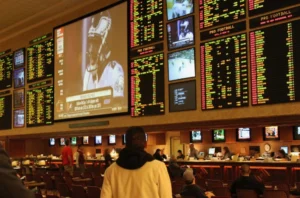
Sports betting was always an industry that relied heavily on data. The difference today (in 2026) is how much data is now public, as well as how advanced the typical sports bettor is with their use of said data. Gaming Control Boards for all states provide both monthly handle and revenue reports. Odds Aggregators monitor odds movements in “real-time” at over dozens of sportsbooks. Consensus Tools display the percentage of public money wagered on almost every market. For those knowledgeable enough to interpret them, these types of transparent data create true edges for bettors. Conversely, the casual fan has had many mysteries regarding what transpires from the opposite end of each of his/her bets.
Handle Reports: The Foundation of Market Intelligence
The State’s reported monthly “Handle” (or the aggregate wagering dollars) is the best way to assess how active a particular sports betting marketplace is. This is prior to Operator payout of winning bets; therefore, it represents the most direct measure of the marketplace. Gross Gaming Revenue (“GGR”) is the money Operators retain from their operation, and is simply the Handle minus monies paid back to successful betters.
There is an obvious relationship between Handle and GGR based upon Hold Percentage. For example, if there are one billion in Handle at a 10% hold rate, then the Operator will have generated one hundred million ($100M) in GGR. There appears to be nothing particularly complicated about this, however, the Hold Rate varies greatly depending upon Sport, Bet Type and Time of Year. Therefore, advanced analysts track both metrics collectively as opposed to tracking either individually.
2026 handle benchmarks across major legal markets:
| State | Est. 2025 Total Handle | Est. 2026 Run Rate | YoY Growth | Dominant Sport |
| New York | ~$22B | ~$25B | +14% | NFL / NBA |
| New Jersey | ~$11B | ~$12B | +9% | NFL / MLB |
| Illinois | ~$9B | ~$9.5B | +6% | NFL / NBA |
| Pennsylvania | ~$7.5B | ~$8.5B | +13% | NFL / College football |
| Michigan | ~$5B | ~$6B | +20% | NFL / NHL |
| Colorado | ~$4B | ~$4.5B | +13% | NFL / MLB |
| Indiana | ~$3.5B |
~$3.8B |
+9% | NFL / NBA |
| Virginia | ~$4.5B | ~$5B | +11% | NFL / College sports |
Public Betting Percentages: What the Crowd Is Doing
Public betting percentages represent how many tickets have been wagered on each side of a market and how much money has been wagered on those sides. The real-time data for both ticket counts and dollar amounts is made available from various sources including Action Network, ESPN Bet’s data tool, and several independent odds providers. To truly understand the significance of public betting percentages there must be an understanding of the difference between the two types of percentages used to report public betting activity.
Bet Percentages vs Money Percentages- Where Intelligence Lies
The first type of percentage, bet percent, is based upon the number of individual wagers placed on either side of a market regardless of size. For example, if a thousand $10 bets are placed on one side of a market and another thousand $500 bets are placed on the opposite side of that market, bet percentages will show that equal number of bets were placed on both sides of the market. Conversely, the second type of percentage, money percent, takes into account the size of each wager placed. Thus, money percent shows the total dollar amount wagered on each side of the market with larger stakes being given greater weight than smaller stakes.
Typical public betting patterns in 2026:
| Scenario | Bet % | Money % | Interpretation |
| Public favorite, no sharp action | 70-80% | 68-78% | True public game; book holds line |
| Public favorite, sharp fade | 72% | 48% | Sharp money on underdog; expect line move |
| Sharp load, low public | 38% | 61% | Sharps backing unpopular side; line moves against public |
| Two-way sharp action | 50-55% | 50-55% | Balanced book; minimal movement |
Line Movement: Reading the Market’s Opinion
Line movement is likely the most meaningful data for serious bettors.
When a line moves – e.g., a spread goes from -3 to -4.5 or a moneyline changes from -150 to -175 – it reflects the markets updated view based upon new information. What the new information is is much more important.
There are three main causes of line movement. Analyzing and identifying these factors is the key to analyzing betting lines:
- Sharp action. (Most impactful) A book responds to a very large-stakes, very-high limit wager when it receives such a wager (from a known “sharp” syndicate, or individual bettor) as quickly as possible; thus, the odds are moved to minimize exposure. Generally, sharp action results in rapid movements (a half-point or more on spreads); they occur long before any influx of public money into the sportsbook. In general, if a line has changed at 8 am on a Tuesday with no recent news or injuries reported, then this was caused by sharp action.
- Roster/Injury News. Nothing happens as rapidly as a starter QB being removed from the lineup prior to Sundays games. While injury news to a team’s star player will clearly show a directional move in favor of the opposing team (-), the degree to which a line moves shows the amount of value that the books assigned to that particular player. For example, a 7-point QB injury will provide an entirely different level of assessment than a 2-point QB injury.
- Volume of Public Money (Least Impactful). Lines may also shift over the course of several hours leading up to kickoff time as recreational players begin to place bets (on weekends especially prior to NFL games). Since the vast majority of recreational players have one-sided wagers placed on their favorite teams, a line may become “inflated” due to the sheer volume of one-sided money on one side of the line. Sharps generally take advantage of lines that have increased due to public money by placing opposite bets to those placed by public money.
Sport-by-Sport Data Breakdown: Where the Money Goes
| Sport | Share of Annual US Handle | Peak Months | Avg. Hold (2025) |
| NFL | ~55% | Sept-Feb | 7.5% |
| NBA | ~16% | Oct-June | 6.8% |
| MLB | ~9% | April-Oct | 6.2% |
| College Football | ~7% | Sept-Jan | 8.1% |
| NHL | ~4% | Oct-June | 6.5% |
| Soccer (incl. international) | ~3% | Year-round | 7.0% |
| Tennis | ~2% | Year-round | 8.5% |
| Other/misc | ~4% | Varies | 9.2% |
The Sharp vs. Square Divide: What 2026 Data Reveals
The difference between “sharps” (pro bettors) and “squares” (recreationals) is key to understanding how the book sets and moves lines. In 2026 there were significant changes in this regard.
In 2026, sharp bettors are being limited by books quicker and more aggressively then ever before. With AI driven account profiling, winning bettors can be identified as much as 300 wagers sooner then previously possible. Once identified, books will limit them or shut down the account. This has become a major issue for the gaming industry. Several states are now looking into if limiting sharp bettors constitutes an unfair business practice. Two states (NJ & MI) are proposing laws to require all legal gaming operators to take bets of at least $50 from each customer.
Some additional information regarding what the data showed about sharp betting in 2026:
Sharps are moving more of their action off shore to other books and exchanges because they can get higher limits and the books do less of a job on identifying and restricting the players.
There was proportionally less sharp play in in game markets than in pre-game markets due to both speed favoring the operator and due to the lower limits associated with in game markets.
Player props, especially player prop legs of same game parlays, have become one of the main targets for sharps because of the inefficiencies in these markets, and although limits have improved, they remain significantly lower than limits seen in game lines.
What the Data Tells Operators
Data from every single user flows into each direction. Tools used by users to help make decisions (reporting tools, percentage of money wagered, etc.) provide bookmakers an immediate snapshot of how the public views lines, enabling risk management and better decision making.
Bookmakers will utilize public betting information in 2026 to:
- Calibrate promotional marketing toward high-handle games (games attracting large amounts of promotional money prior to major events)
- Manage liability concentrations (when 80 percent of tickets and dollars flow onto one side of a game), through aggressive line shading or hedging via other bookmaker’s risk
- Identify emerging “sharp” account activity (accounts exhibiting specific betting behaviors such as early wagers, specific line movements, consistently placing wagers on the same side of a game), typically identified through patterns within public aggregated data
Transparency has never existed at the level of today’s sports betting data ecosystem. Transparency breeds a more informed group of bettors, more competitive markets, and ultimately, a greater number of people who can successfully find value in a smart marketplace.