
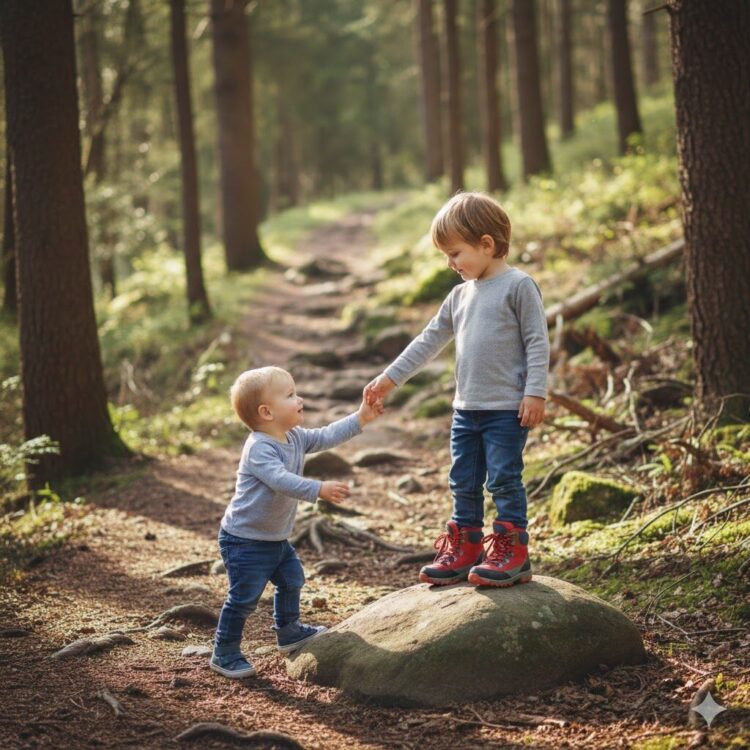
There’s a specific sound that defines childhood. It’s the rhythmic slap of sneakers against a paved driveway, the crunch of gravel under tiny feet, and that sudden silence that follows when a child decides to climb something they probably shouldn’t. Honestly, we often look at kids and see their boundless energy as a natural resource, something they’re simply born with.
But if you watch closely, you’ll notice that their bravery is often tied to how steady they feel on their feet. Have you ever noticed how a child’s posture changes when they feel secure? Maybe it’s that subtle shift from a hesitant shuffle to a confident stride. I guess we forget how big the world feels when you’re only three feet tall.
When we talk about childhood development, we usually focus on milestones like first words, reading levels, and social skills. We rarely spend much time talking about the physical equipment that carries them through these stages. However, the connection between physical comfort and emotional confidence is profound. A child who isn’t worried about tripping or slipping is a child who’s free to explore the world with their head held high. And that’s the point.
Building Stability from the Ground Up
Confidence isn’t something that’s just taught through words of encouragement. It’s built through successful physical interactions with the environment. Think about the first time a toddler tries to navigate a steep grassy hill. If they’re wearing flimsy sandals or heavy, oversized boots, their focus is entirely on their feet. They’re hesitant. They look down. They might even give up and crawl. You know that look of defeat on a little face? It stays with you.
So, what happens when we change the equation?
When that same child is wearing shoes designed for support and grip, the hill becomes a playground rather than an obstacle. This is where the magic happens. By providing footwear that offers stability, we’re essentially giving them a green light to take risks. Those risks, whether it’s jumping off a low wall or running a race at recess, are the building blocks of self-esteem.
It’s about feeling solid.
The Psychology of Feeling “Ready”
We’ve all had that feeling of putting on a specific outfit and suddenly feeling more capable. For adults, it might be a sharp suit or a reliable pair of hiking boots. For kids, that feeling is even more visceral. When a child puts on a pair of high-quality athletic shoes, like kids’ Hoka shoes, they often feel like they’ve gained a superpower. I remember the hum of the laptop at midnight while researching gear for my own runner, realizing just how much the right support changes their “can-do” attitude.
And isn’t that what we want for them? To feel like they can conquer the playground?
It’s not just about the brand or the color, though those things certainly matter to a ten-year-old. It’s about the way the shoe cradles the foot. Proper arch support and cushioning mean that their legs don’t get tired as quickly. When a child feels physically tired, they’re more likely to stay engaged in group activities. They don’t have to sit out because their feet hurt. They stay in the game, and staying in the game is how they learn to lead, to follow, and to cooperate.
Physical Comfort as an Emotional Safety Net
Children are incredibly sensitive to discomfort, even if they can’t always find the words to describe it. A mistake or a pinched toe can turn a fun family outing into a meltdown in minutes. More importantly, chronic discomfort can lead to a subconscious avoidance of physical activity.
If a child associates running with pain because of poor footwear, they’ll eventually stop seeing themselves as “athletic.” They might start to identify as the kid who prefers to sit on the sidelines. But what if we could remove that barrier entirely?
Honestly, by ensuring their shoes are fitted correctly and made of breathable, flexible materials, we remove that frustration. We ensure that their physical experience of the world remains positive. It’s like removing a pebble from their shoe before they even feel it.
Encouraging Independence
One of the greatest gifts we can give a child is the feeling of independence. This starts with small things, like being able to put on their own shoes. But it extends to the independence of movement. A well-made shoe allows a child to move through different terrains, from the classroom to the playground to the woods, without needing a hand to hold.
This independence breeds a sense of “I can do this.”
When a child successfully navigates a balance beam or reaches the top of a jungle gym, they’re proving to themselves that they’re capable. They’re learning that their body is a reliable tool. That realization stays with them long after they’ve outgrown that particular pair of shoes. You know, it’s those little victories that count.
The Long-Term Impact of a Solid Start
As parents and educators, our goal is to help children develop into adults who are comfortable in their own skin. That journey starts at the very bottom. By investing in quality footwear, we’re showing children that their comfort matters and that their adventures are worth supporting.
We’re not just buying something to cover their feet. We’re providing the grip they need to climb, the cushion they need to land, and the stability they need to stand tall. In the end, the right shoes are less about fashion and more about the freedom they provide. They give kids permission to stop looking at the ground and start looking at the horizon.