
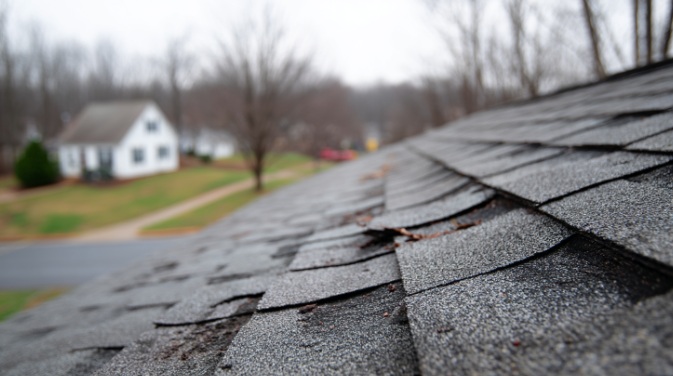
Most homeowners think about their roof exactly twice: when they move in, and when water starts dripping onto the kitchen floor. Everything in between is silence. That’s a problem, because asphalt roofing doesn’t fail all at once. It fails slowly, quietly, and usually in places you’d never think to look. Industry data consistently shows that the majority of roof damage goes undetected for months, sometimes longer, before any interior sign appears. By that point, what started as a surface issue has often worked its way into the structure.
Why Small Problems on an Asphalt Roof Compound Faster Than You’d Expect
A single cracked or missing shingle looks minor. It isn’t. That opening is all the moisture needs to reach the roof deck, then the sheathing, then the insulation underneath. Water doesn’t stay where it enters. It travels, spreads, and saturates materials that were never designed to handle it. Wood rots. Insulation loses R-value. Mold follows. This is exactly why timely asphalt roof repairs matter — what costs a few hundred dollars to fix in spring can turn into a structural problem worth several times that by the following winter.
The compounding happens fast once it starts. And it almost always starts somewhere invisible.
Granule Loss — The Warning Sign Hiding in Your Gutters
Clean out your gutters and look at what’s in there. If you see dark, sand-like granules collecting at the downspout, your shingles are shedding their protective coating. Those granules aren’t decorative. They shield the asphalt layer from UV degradation and direct weather impact. Once they’re gone, the underlying material ages rapidly and loses flexibility.
Most homeowners assume granule buildup in gutters is normal wear. For a brand-new roof, minor shedding is expected. On a roof more than eight to ten years old, it’s a warning that the surface protection is failing and the remaining lifespan has shortened significantly. The shingles may look fine from the ground. They aren’t.
Curling and Buckling Shingles — When Shape Tells the Whole Story
Two distinct deformation patterns show up on aging asphalt roofs. Cupping is when the edges of a shingle turn upward, creating a concave shape across the surface. Clawing is the reverse: the middle lifts while the edges stay flat. Both mean the same thing structurally — the shingle has lost its dimensional stability and can no longer lie flat against the roof deck.
A curled shingle isn’t just an eyesore. It creates gaps where wind can get underneath, dramatically increasing the risk of blow-off in any significant storm. It also prevents proper water runoff, pooling moisture at the edges, where it eventually works beneath the course below. Either deformation pattern means the clock is running.
How Weather Cycles in the Northeast Accelerate Shingle Damage
The freeze-thaw cycle is particularly brutal on asphalt. Water that seeps under a slightly lifted shingle expands when it freezes, forcing the shingle further out of position. It thaws, contracts, and the gap is now slightly larger than before. Repeat that process fifteen to twenty times over a single winter and a minor imperfection becomes a genuine opening. Summer heat compounds the damage from the other direction, accelerating the oxidation of the asphalt binder and making shingles brittle by the time fall arrives.
Iredell County doesn’t get the same extremes as New England, but the region still sees enough freeze-thaw cycles and summer heat to put real stress on roofing materials year after year.
Flashing Failures Around Chimneys and Vents
Flashing is the metal sheeting that seals the junction between your roof surface and any vertical penetration — chimneys, vents, skylights, dormers. It’s also the most failure-prone point on any asphalt roof, and almost nobody thinks about it until there’s water staining on a ceiling directly below.
Metal expands and contracts with temperature changes. Over the years, that movement works the sealant loose and lifts the flashing edges away from the surface. The gap that forms is often just a few millimetres wide — enough to be completely invisible from the ground, and more than enough to let water in every time it rains. Interior evidence of a flashing failure typically appears six to eighteen months after the failure itself. By then, the water has been travelling for a while.
Moss, Algae and the Slow Damage Nobody Takes Seriously
Green or black streaking across your shingles is easy to dismiss as a cosmetic issue. It isn’t. Moss in particular does active damage. It roots into the granule layer, physically lifting shingle edges as it spreads, and holds moisture against the surface for extended periods after rain has stopped. That sustained moisture contact accelerates granule loss, softens the asphalt underneath, and creates exactly the kind of persistent damp environment that invites wood rot in the decking below.
Algae is less aggressive but still degrades UV protection over time. Neither is just a visual problem. Both are biological processes that are actively shortening your roof’s useful life while looking like nothing more than a stain.
The Difference Between Treating Moss and Actually Fixing the Underlying Problem
Zinc strips and chemical treatments can slow moss regrowth. They don’t reverse existing damage, and they don’t address why moss established itself in the first place. Persistent moss growth usually means a section of the roof retains moisture longer than it should, often due to poor drainage, overhanging tree cover, or compromised shingles nearby. Treating the surface without investigating the underlying condition is the equivalent of repainting over a crack in the wall. It looks better for a while, then the same problem returns, slightly worse.
Sagging Roof Sections and What They Mean for the Structure Below
A roof that sags visibly is a roof that has already crossed a line. The surface is no longer the problem. Sagging means the decking, the rafters, or both have been compromised, typically by prolonged moisture exposure that the surface failures allowed in. It’s the one warning sign that even the most inattentive homeowner notices immediately. And unfortunately, noticing it at this stage means the damage has been accumulating for a long time.
Repair at this point is significantly more involved and significantly more expensive than anything that would have been needed six or twelve months earlier. The structure has to be addressed before any new roofing material goes on. This is exactly the scenario that regular inspection exists to prevent.
How Often Should an Asphalt Roof Actually Be Inspected
Twice a year is the standard professional recommendation: once in spring after winter stress, and once in fall before the cold season begins. Add an inspection after any storm that brings high winds, large hail, or heavy debris impact. Those events can cause damage that isn’t obvious from the ground but is very obvious to someone on the roof looking closely at the granule surface and flashing seams.
A ground-level self-inspection has real value. Binoculars help. But it won’t show you lifted flashing, early granule loss in a specific zone, or the first signs of sheathing movement underneath. A professional inspection covers all of that in a single visit and gives you a documented condition report rather than a best guess from the driveway.
Getting a Professional Eye on Your Roof Before the Damage Decides for You
Every problem covered in this article is manageable when it’s caught early. Granule loss, curling shingles, flashing gaps, moss damage — none of these are catastrophic on their own. They become catastrophic when they’re left alone long enough for water to reach the structure below. The difference between a repair and a full replacement is almost always time.
For homeowners in New Jersey and Pennsylvania, American Quality Remodeling offers professional roof inspections and asphalt roof repair services — the same company that handles siding, windows, gutters and skylights, so you get a full picture of your home’s exterior in one visit. Free estimates are available, and catching one problem early tends to reveal others that were quietly developing alongside it.
The roof won’t tell you when it needs attention. That part is on you.