
Over 14 million homes have pest problems, and there are thousands of pest sighting reports across major university campuses every day, since these shared locations create even more opportunities for infestation than domestic locations. When staff ignore these early warnings, localized problems escalate into building-wide infestations that disrupt learning and housing operations. By implementing a standardized monitoring program, facility managers can identify vulnerabilities before they reach critical thresholds.
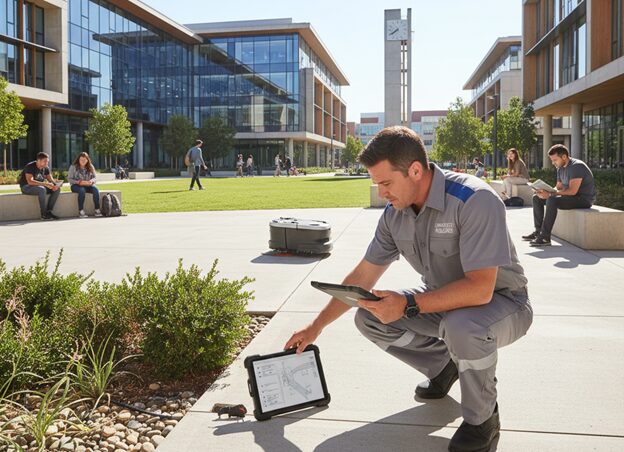
Why Modern Campuses Require Integrated Pest Management
Managing pests across sprawling academic grounds involves more than just periodic spraying. Campus environments serve as massive, interconnected ecosystems, where food service facilities, student housing, and athletic complexes exert constant pressure on insect and rodent populations. Traditional reactive treatments often fail because they ignore the environmental conditions that attract pests in the first place.
Instead of blanket applications, administrators now shift toward Integrated Pest Management. This strategy focuses on long-term prevention through monitoring and habitat modification rather than immediate chemical reliance. It shifts the burden from reaction to proactive maintenance.
Building An Effective Strategy Through Monitoring
An effective plan relies on high-quality data collection. Maintenance crews and custodial staff must conduct regular inspections to identify signs such as droppings, entry gaps, or moisture accumulation. These observations serve as the primary intelligence for the entire campus ecosystem.
The goal is to identify the point at which pest presence justifies intervention. Experts agree that a rigid threshold keeps chemical use to a minimum.
- Establish clear documentation protocols for all pest sightings
- Train custodial staff to recognize early warning signs in dining halls
- Verify that mechanical exclusion methods remain intact during seasonal transitions
You need clear rules and consistent data flows, while also acknowledging that staff buy-in is key. Monitoring allows you to target specific areas of high activity, and when you treat the source, the overall campus environment improves for everyone. Relying on reduced risk protocols ensures that students and faculty remain safe while effective control is maintained.
Coordinating With Professional Oversight
Even the best internal teams encounter complex challenges that demand specialized knowledge. Certain pests, particularly structural threats such as termites, in humid coastal regions require advanced detection tools and chemical expertise beyond general maintenance.
When internal protocols do not solve a persistent issue, your team should coordinate with Clark’s Termite & Pest Control to manage high-level risk. Outsourcing complex tasks allows your facilities team to focus on daily sanitation and structural upkeep.
Professionals provide the equipment and diagnostic experience needed to handle severe infestations. Watch the pest levels, use internal crews to manage minor issues, and call in professional help to ensure long-term safety.
EH&S departments often act as the bridge between general facilities management and these specialized external providers. They define the safety standards and ensure that all third-party actions align with campus sustainability goals. This partnership is vital for keeping large, complex infrastructures free from pests without compromising occupant health.
Protecting Residence Halls and Food Service
Residence halls and dining centers present the highest risk profiles on any campus. High student turnover, frequent deliveries, and consistent food waste streams provide everything pests need to thrive. Preventing these issues requires a hyper-focused approach to building maintenance and hygiene, even as hybrid learning increases and on-site dynamics change.
Kitchens require rigorous exclusion protocols to block common entry points. Custodians must verify that door sweeps are tight and that gaps around plumbing fixtures are sealed with industrial-grade materials. A breach in one room often leads to a problem in a floor-wide corridor.
In short, cleanliness stops bugs, and exclusion keeps them out. Focus on these two areas to see immediate drops in complaints.
Proper waste management outside of dining halls is just as critical as the work done inside. If exterior bins are overflowing, pests will eventually find their way inside.
Mitigating Regional Climate Risks
Different climates dictate the types of pests a campus will face throughout the academic year. Campuses in humid environments deal with consistent termite and moisture-loving pest pressure, whereas those in drier regions may struggle more with seasonal rodent migration. Understanding your specific regional pressures allows for better resource allocation.
Independent research findings demonstrate that tailored prevention programs significantly decrease long-term maintenance budgets. When you adapt your IPM program to your local climate, you stop spending money on unnecessary broad-spectrum chemicals. Instead, you invest in structural improvements that offer a much better return on investment.
Sustaining Long Term Campus Health
A successful pest program remains a constant effort rather than a one-time initiative. Administrators must ensure that the institutional knowledge regarding inspection and exclusion remains current as staffing changes occur. Regular training updates for custodial and maintenance crews prevent the decay of your established protocols.
The integration of health, safety, and operational excellence defines the modern campus environment. By maintaining a focus on biological and physical controls, universities protect their assets and their inhabitants simultaneously. This commitment to sustainable practices builds a resilient campus that withstands the pressure of daily operations while keeping the learning environment secure and efficient. Keeping the campus clean remains the strongest form of defense for any facility manager.
If you’re keen to expand your understanding of a range of subjects and stories relating to modern learning, stay on our site. We have posts providing insights into all sorts of areas relevant to your interests.