
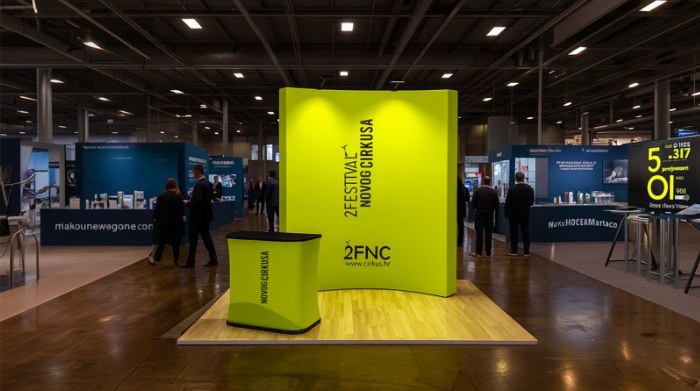
Every exhibitor faces the same fundamental challenge on a trade show floor: how do you hold attention in a space where hundreds of competitors are fighting for the same eyeballs? The answer has everything to do with your display system.
Over the last decade, one format has pulled decisively ahead of the alternatives in terms of visual quality, portability, setup speed, and long-term value. Tension Fabric Displays have become the professional standard for serious exhibitors, and the reasons are structural, not cosmetic.
The Graphic Quality Gap Nobody Talks About
Vinyl banner graphics, regardless of print resolution, have a ceiling on visual quality that fabric does not. Vinyl reflects ambient light in ways that create glare on the graphic surface. In most trade show lighting environments, this glare competes with the graphic itself and is visible to attendees approaching. It also photographs poorly when staff or buyers photograph your booth for social sharing.
Tension fabric graphics printed via dye-sublimation push ink directly into the fiber structure of the fabric. The result is a graphic that has no reflective surface layer because it is the surface. Colors reproduce with depth and consistency that vinyl cannot replicate, and the fabric material diffuses rather than reflects light, so the graphic remains legible and clean from every angle, under any lighting condition.
At a trade show, where buyers form visual impressions in under five seconds, this quality gap translates directly into booth stops.
Setup in Under Ten Minutes: What That Actually Means for Exhibitors
Trade show setup time is a real cost. Booth hours are charged whether or not your display is ready, and exhibitors who spend ninety minutes wrestling with a display system arrive on the floor stressed, late, and behind on pre-show preparation.
A quality tension fabric display system uses a push-button or snap-lock aluminum frame that assembles without tools. The pillowcase fabric graphic slips over the fully assembled frame and zips closed.
For an 8ft display, total setup time from bag to standing display runs seven to ten minutes for one person doing it for the first time. For an experienced exhibitor, it runs under five. Breakdown is equally fast.
Compare this to a traditional pipe-and-drape system or a foam board display with velcro-mounted panels. The labor and time difference across a full show season is significant.
The Portability Advantage for Multi-Show Exhibitors
Shipping display hardware is one of the hidden ongoing costs of trade show participation. Heavy aluminum extrusion frames, rigid graphic panels, and large crates drive drayage costs and freight bills that accumulate fast across a ten-show annual calendar.
A complete tension fabric display system, including the frame, the graphic, and the carry bag, weighs a fraction of what an equivalent rigid panel display weighs. Many 8ft tension fabric systems ship in a tube bag that qualifies as checked airline luggage. A 10ft system ships in a carry bag that fits on a luggage cart. Neither requires a freight forwarder or a shipping crate.
For exhibitors who drive to regional shows, the same logic applies to cargo space. A tension fabric display takes up the trunk of a car. A rigid display system requires a van or a delivery service.
Graphics That Update Without Buying New Hardware
Any exhibitor who has been in the industry for more than two seasons knows the frustration of a display system that requires a full hardware replacement every time the brand updates. Legacy systems tie your graphics to a proprietary frame in a way that makes partial updates expensive or impossible.
Tension fabric displays decouple the hardware from the graphic. The aluminum frame is brand-agnostic and long-lasting. The fabric graphic is a separate component that can be reprinted and replaced independently. When you launch a new product line, rebrand, or target a different audience at a specific show, you order a new fabric graphic for the same frame. The hardware investment amortizes across years of use.
This modular graphic approach also allows exhibitors to maintain multiple graphics for different shows, different audiences, or different campaign periods without duplicating the frame investment.
Why Tension Fabric Wins the Total Value Calculation
The upfront cost of a quality tension fabric display is slightly higher than a comparable vinyl banner system. Over a 3 to 5 year period of active exhibiting, the total cost calculation reverses. Lower shipping weight, lower drayage, faster setup requiring less labor, and graphic updates that do not require new hardware all reduce the cost-per-show significantly compared to alternative systems.
For exhibitors who treat trade shows as a serious revenue channel rather than a marketing line item, the display system is an infrastructure investment. Tension fabric displays are the infrastructure that professionals choose because they perform consistently, look premium at every show, and cost less to operate over time.
If you are evaluating display options for your next season of events, custom Tension Fabric Fusion Displays represent the investment that pays back across every show on your calendar.