
IFN Staff
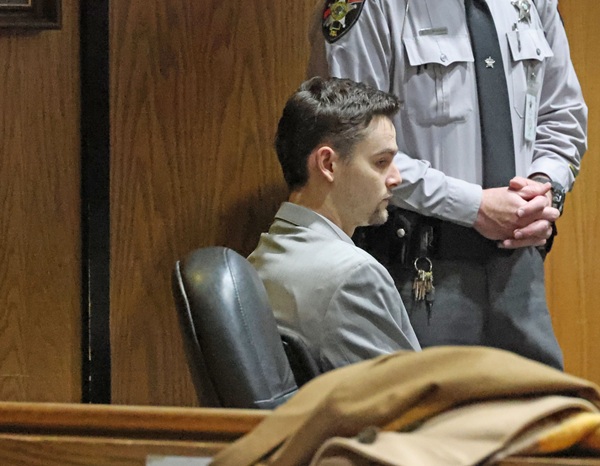
Defense attorneys worked on Wednesday to raise questions about the sufficiency of the state’s evidence and the accuracy of witness testimony presented in the Iredell County Superior Court trial of Austin Ray Harmon, who faces numerous criminal charges in connection with a deadly crash that occurred more than three years ago near Statesville.
Wednesday marked the fifth day of testimony in the trial. N.C. State Highway Patrol Trooper David Reid spent the entire day on the witness stand, continuing his testimony about his work reconstructing the collision scene using photos, precise GPS-guided measurements of the crash scene, and the results of a nighttime visibility study.
As defense attorney Ken Darty cross-examined Trooper Reid about the NCSHP’s investigation, he elicited testimony and introduced evidence that contradicted some earlier witness testimony and recorded statements made to investigators. Darty also raised questions about evidence that was not collected by investigators, setting up potential arguments that by failing to thoroughly investigate the troopers had damaged Assistant District Attorney Mikko Red Arrow’s ability to prove the charges against Harmon beyond a reasonable doubt.
Harmon, now 26, is charged with three counts of felony death by motor vehicle, three counts of serious injury by motor vehicle, DWI and reckless driving in connection with the crash. The charges were filed by troopers investigating a crash on Fort Dobbs Road involving Harmon’s Honda Accord and a golf cart occupied by six people on the night of June 13, 2022.
Michael Marlowe, who was driving the golf cart, was fatally injured in the collision, along with his 5-year-old son Bentley and 13-year-old daughter Jada. Marlowe’s fiancée, Amy Mills, their 2-year-old daughter Bailey, and a 16-year-old family friend, Teagan Murphy, were all seriously injured.
According to previous testimony, a lab analysis of a sample of Harmon’s blood taken after his arrest indicated his blood alcohol concentration was above the minimum level for impaired driving. A field sobriety test performed by a trooper also indicated he was impaired shortly after the crash.
The central issues in the trial appear to be how, exactly, the crash occurred and whether Harmon’s impairment was the proximate cause of the crash.
Trooper Reid said the evidence from the crash scene, including gouge marks in the highway caused by the undercarriage of the golf cart at the site of maximum impact between the Honda and the golf cart, proved the crash occurred in the eastbound lane of Fort Dobbs Road after the westbound Honda crossed the centerline. Mills testified earlier that the golf cart was traveling east in the eastbound lane on Fort Dobbs Road and was headed toward Cedar Lakes Drive when the collision occurred.
Harmon, however, has consistently maintained that the golf cart pulled out in front of his Honda as he was traveling west on Fort Dobbs Road at about 40 mph and that he swerved to miss it. After calling 9-1-1, Harmon told an emergency telecommunicator that the vehicle he hit “came out of the grass” and onto the road. In the 9-1-1 call, the jury also heard the defendant ask Mills, “Why were y’all going on the road?”
In earlier testimony, Trooper Reid said the evidence, including data from the nighttime visibility study, did not support Harmon’s version of the crash.
Under questioning from Darty on Wednesday, the trooper also told the jury that he had not tested the tire impressions found in a dirt area near the crash site to determine if they were created by the golf cart. There was no evidence that the vehicle had been there and therefore no reason to analyze the area, Reid said.
The defense team of Ken and Kaleigh Darty has also sought to show Harmon was not significantly impaired, while raising questions about whether Michael Marlowe was impaired while operating an unregistered golf cart that lacked most all safety equipment — including seat belts, mirrors, and brake lights — while traveling illegally on a state road on a dark night. The six occupants, including the two young children who were not in safety seats, were not restrained. All six occupants were ejected. Michael and Bentley Marlowe were pronounced dead the scene, and Jada Marlowe died about a week later.
Also on Wednesday, the defense introduced as evidence two Snapchat photos taken on the evening of the crash by Teagan Murphy that directly contradicted Mills’ testimony that she, Marlowe, the two teens and the two younger children arrived at Mi Pueblo restaurant about 6:30 p.m. and stayed until about 9 p.m.
The deadly crash occurred about 9:30 p.m.
The first photo, which displayed a time stamp of 7:49 p.m. on June 13, 2022, showed Jada and Teagan on the golf cart at the Marlowe/Mills home off South Chipley Ford Road. A second photo showed members of the group as they walked into Mi Pueblo at 8:13 p.m. on the same date, meaning they were at the restaurant for less than 50 minutes — and not the two hours and 30 minutes that Mills said.
During that time, Michael Marlowe drank almost all of a 32-ounce beer, according to witness testimony. Under questioning from Ken Darty, Trooper Reid testified that he smelled alcohol near Marlowe’s body as first responders were extricating him from the rear of the Honda.
Conversely, none of the paramedics who encountered Harmon at the scene of the crash, nor the trooper who administered the field sobriety test, nor a resident who came outside after hearing the crash smelled alcohol on the defendant, Reid testified in response to questions asked by the defense attorney.
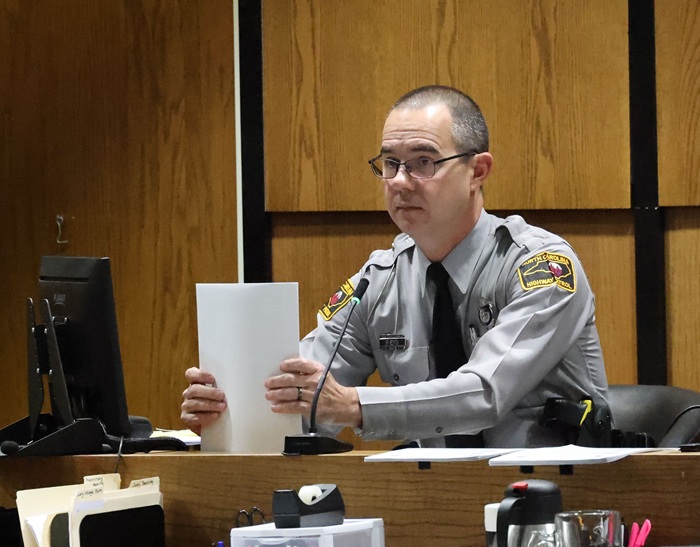
The NCSHP collision reconstructionist also told the jury that samples of Michael Marlowe’s blood were not taken or submitted for toxicology screening. Investigators also did not check security cameras for videos that could have provided additional evidence in the case despite being granted access by Mills. They also did not check video footage at Mi Pueblo to determine how much alcohol Marlowe consumed or question the bartender who served him until a few weeks before the trial, Reid said.
During questioning by the prosecutor, the trooper told the jury that having additional information about whether Marlowe was impaired would not have changed his conclusions about the case.
Red Arrow told Judge Thomas Lock on Wednesday afternoon that he intends to finish presenting the state’s evidence on Thursday. The judge advised the attorneys for both sides to be prepared for the charge conference, during which they will discuss the instructions on the law that the jury will receive before beginning deliberations.
This is so sad. Jada had a wonderful life planned. This man had no right to be drinking and driving, not this time, or the time before this deadly accident or the time after. How could it possibly be right to turn him loose?