
IFN Staff
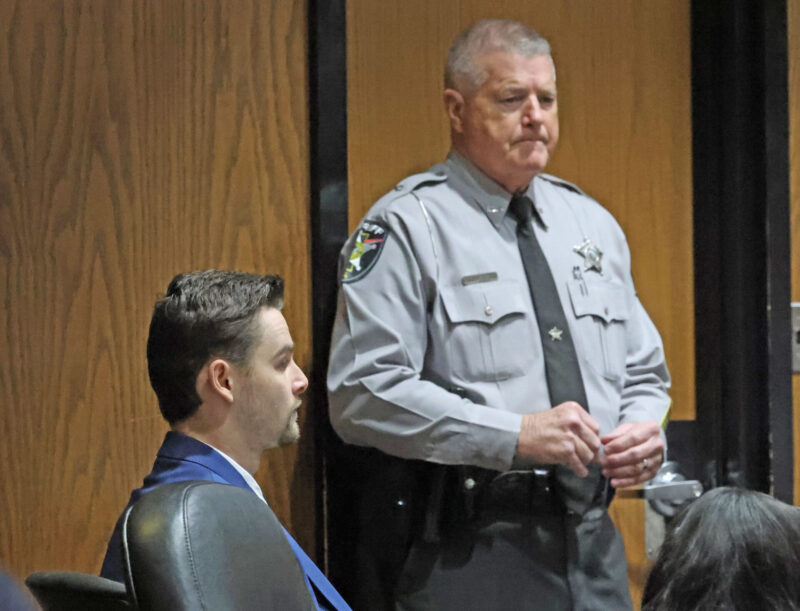
A jury began deliberations on Friday afternoon following closing arguments in the Iredell County Superior Court trial of Austin Ray Harmon.
Harmon, 26, faces six felony charges and two misdemeanors in connection with a deadly crash involving his Honda Accord and a golf cart. The collision, which occurred on Fort Dobbs Road near Statesville on June 13, 2022, resulted in the deaths of three people and seriously injured three others.
The jury of seven men and five women began deliberating about 2:45 p.m. on Friday afternoon. Judge Thomas Lock recessed the proceedings about 5 p.m. and instructed the panel to return Monday morning to resume its work.
After the defense team rested its case, attorneys for the defense and prosecution had an opportunity to make a final argument to the jury on Friday.
Defense attorney Ken Darty told the jury that the prosecutor had not met his burden of proving that the defendant was guilty beyond a reasonable doubt.
“This is tragic, but it is not criminal,” he said. “It’s horrible what happened to this family.”
The crash, which claimed the lives of Michael Marlowe and two of his children, Jada and Bentley, and seriously injured his fiancée Amy Mills, their daughter Bailey and family friend Teagan Murphy, was caused by the actions of Michael Marlowe, who was driving the golf cart, Darty argued. According to trial testimony, the golf cart was not equipped with seat belts, mirrors, brake lights and turn signals and it was not legally permitted to be operated on state roads.
The testimony of Jeff Brooks, the only witness to the crash who did not have an interest in the case, corroborated what Harmon told a 9-1-1 telecommunicator and what he described in his written statement after the crash — that he saw something entering his lane of travel and swerved to avoid hitting it just before the crash, Darty added.
Brooks’ testimony — that he saw no indications that Harmon was impaired — echoed what several first responders and a nearby resident told the jury, the defense attorney argued. Meanwhile, photographic evidence that contradicted Mills’ testimony created serious doubts about her testimony that the jury should consider, he added.
The defense attorney also told the jury that the N.C. Highway Patrol, which investigated the crash, had not done a thorough job. Even though there was evidence Michael Marlowe had consumed alcohol before the crash, his blood was not analyzed to determine if he was impaired. Troopers also did not check security videos that could have supported or contradicted Mills’ statements — and the nighttime visibility study conducted by troopers did not take into account what Harmon said occurred, Darty argued.
Assistant District Attorney Mikko Red Arrow began his final argument by playing an NCSHP dash cam video of Harmon speaking with troopers at the scene, taking a portable breath test and undergoing a field sobriety check. The results of those tests — and a laboratory analysis of blood drawn after his arrest all proved that he was impaired at the time of the crash, the prosecutor argued. The defendant’s blood alcohol concentration was 0.12, which is above the minimum for legal impairment in North Carolina, according to trial testimony.
“Ask yourselves, ‘Is that a man who had any business being behind the wheel of a 4,000-pound missile?’ ” Red Arrow asked the jury after the video played. “You saw what he looked like that night.”
Evidence from the crash site, the prosecutor said, also proved that Harmon, who was traveling west, crossed the centerline and crashed into the golf cart in the eastbound lane.
Harmon’s explanation for the crash “defies logic and common sense,” Red Arrow said, contending that the defendant’s vehicle was likely hugging the line or was a little over the line as it rounded the curve right before the crash. Because Harmon was impaired by alcohol and possibly a prescription painkiller and THC, the defendant mistakenly perceived the golf cart was in his lane before darting into the eastbound land and crashing into the golf cart, leaving the Marlowe family “irreparably and permanently devastated,” he argued.
While Michael Marlowe’s decision to drive the ill-equipped golf cart on a dark road after drinking alcohol may have been a proximate cause of the crash, Red Arrow said, those facts do not mean that Harmon’s impairment was not also a proximate cause of the crash.
“The golf cart shouldn’t have been on the road absolutely,” the prosecutor argued. “But it doesn’t matter.”
Judge does not allow testimony about earlier near-miss involving Marlowe golf cart
Harmon’s defense suffered a major setback — and gained grounds for a possible appeal — on Friday morning when Judge Lock ruled that his attorneys could not present evidence related to a near-accident involving the Marlowe family golf cart that occurred on Fort Dobbs Road less than 24 hours before the deadly crash involving Harmon.
During a hearing outside the presence of the jury, a northern Iredell County resident testified that his vehicle nearly collided with a golf cart that pulled out in front of him near the site of the crash involving Harmon and the Marlowe family.
Auzzie Carol, who said he knew Michael Marlowe and Austin Harmon, told the judge that Marlowe was driving the golf cart, which he missed hitting by about six feet. The near-miss occurred while he was driving on Fort Dobbs about 12:37 a.m. on June 13, 2022 — about 21 hours before the deadly crash involving Harmon. Two teenage girls were standing up on the back, holding onto rails of the golf cart, Carol testified.
Carol, who was driving east at the time, said the golf cart entered the roadway from the north side of Fort Dobbs Road near a home that was under construction. He did not see any headlights on the golf cart. “They completely crossed the road in front of me,” he testified.
Carol said he hit the brakes so hard that it destroyed his brake pads. After stopping, he said he rolled down the window and “screamed and hollered” at Marlowe.
Defense attorney Ken Darty argued that the incident involving Carol, which came to light during Harmon’s trial after Carol referenced the near-miss in a social media post, was important to Harmon’s defense. Carol’s testimony would contradict part of Mills’ testimony and corroborate Harmon’s version of the deadly crash, Darty said.
Judge Lock, however, said the probative value of Carol’s testimony was minimal and would potentially confuse and inflame the jury.
The judge also shot down a request by the defense team to introduce as evidence a portion of a video recorded by a trooper’s dash cam while Harmon was being transported to the Iredell County Detention Center following his arrest. The defendant repeated his claim that the golf cart was traveling in his lane prior to the crash.
The judge ruled that the video was not part of a video that the prosecutor introduced as evidence during the trial and was therefore inadmissible.