
BY DEBBIE PAGE
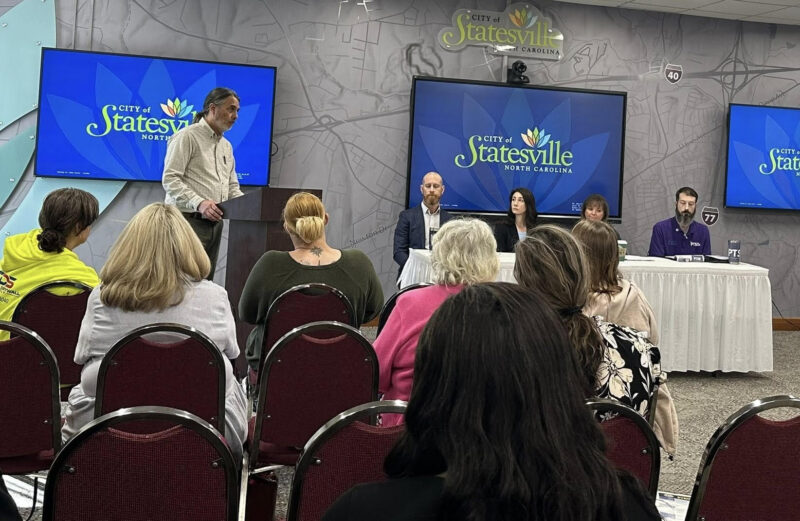
The Drug Alcohol Coalition of Iredell’s recent “In The Know” event featured a PTSD panel discussion moderated by Partners Health Management’s Jeff Eads and featuring Sean Wilson of OPTI Health Mooresville, Iredell County Emergency Medical Services Paramedic of the Year Jamie Rambo, Statesville Fire Department’s Fire/Life Safety Educator Heather Gessler, and Derek DeVos, founder of The PTSD Inc.
Eads began the session by reminding attendees of the value of each person we meet. “Everyone we talk to means the world to someone else, so we need to be mindful in our interactions every day,” he said.
Trauma, mental health, and substance use disorder (SUD) are all intertwined in multi-faceted human beings. Eade said any conversation about SUD should not be about blame or stereotypes but instead about what emotional weight people are carrying that shapes their behavior and lives.
When looking at substance disorder issues, treatment often revolves around getting the person free of the substance, but without addressing the underlying trauma the person likely experienced, the real problem remains lurking underneath.
Before they fall into the cracks, people who have experienced trauma need real support before reaching the crisis point of PTSD and self-medication.
Wilson said people who fall into SUD are not bad people. Their bad memories caused by their trauma create hyper-vigilance that they are trying to turn off with substance use.
Groups particularly at-risk for PTSD are first responders and military members, who encounter terrible things on a regular basis and do not have time to process or treat the trauma they see and experience.
The first responder and military culture also values toughness. These people do the hard things, so they carry a heavier mental load.
Police officers, EMS personnel, firefighters, and emergency room staff continually encounter people in crisis in their very worst moments, and the cumulative effect of these interactions on these professionals can be a heavy burden.
PTSD AND SUD
DeVos said that people with PTSD are hyper-vigilant because of the memories they are trying to escape. To suppress them, they often turn to alcohol to suppress the emotional weight they carry.
Those who experience trauma are trying to turn down their charged nervous systems after seeing or experiencing trauma, leading to sleep disorders and exhaustion that increase trauma responses. The resulting mental health issues (anxiety, depression, mood regulation, suicidal thoughts, etc.) often lead to SUD to calm the mental noise.
Wilson said that PTSD sufferers in these professions get into a trauma loop, turning to substances that numb the pain. Alcohol consumption is often a cultural norm, not just accepted but expected, and an easy path to slip down as an escape.
“No one starts out wanting to be an alcoholic or addict,” Wilson said.
Eads added that in today’s culture, people can easily find a reason to drink, including celebrations, depression, stress relief, winding down, or as a social lubricant.
PTSD TREATMENT
Rambo said turning to substances without addressing the underlying trauma is like giving someone Tylenol for fever without treating the illness causing it.
Wilson noted that trauma affects both the mind and body, which keeps score through physical and mental pain. Alcohol or substances relieve that pain temporarily.
A person’s biological, psychological, social, and spiritual sides must be all addressed to successfully treat PTSD.
Eads pointed out the health effects of chronic stress, including cardiac, metabolic, and immune system issues. “If treatment focuses just on behavior, we miss the wounds underneath,” he said.
Another challenge is getting people access to the help they need because of embarrassment or shame.
Gessler said that public safety folks often reach out to chaplains or peer support when they need help because these colleagues understand what they have experienced.
Wilson said peer and mentor programs are effective with military vets because of a higher trust factor.
Rambo said that many people do not want to talk about the trauma they see or experience. “They just want to figure out how to enjoy life again, teach them to be a human again,” Rambo said.
Wilson said that standard therapy of talking about past trauma is less effective. Instead, people experiencing PTSD need to focus on living in the present and stop ruminating on the past to control their “now.”
Eads likened the PTSD to constant instant reply of a NASCAR race crash. “They keep checking a past they cannot change. They keep reliving and get stuck.”
Those who have lived experience are most effective in helping those with PTSD and trauma treatment. Just handing them information about a help resource makes no connection.
The delays and logistics of accessing treatment access also create barriers when people in crisis need immediate help.
Family, friends, and colleagues can help by being aware of changes in behavior and show up for them before they even ask for help. DeVos said active listening without responding helps those with PTSD open up and get things off their chest because the helper is connecting in a positive, non-threatening way.
Eads said the hardest thing is not giving advice. “Our discomfort makes us want to fix things, but we can only fix ourselves,” he said.