

There’s a strange moment that happens to a lot of gamers these days. You boot up your favorite title, and before you even get to the actual gameplay, you’re greeted by a spinning wheel, a daily login reward, or a flashy loot box begging to be opened. Sound familiar? It should. Because those mechanics didn’t originate in gaming. They came straight from the casino floor.
And the thing is, most players don’t even notice anymore. That’s how deeply embedded these systems have become.
The Slot Machine in Your Pocket
Let’s rewind a bit. Loot boxes first showed up in the mid-2000s through Asian MMOs. They stayed relatively niche until about 2016, when games like Overwatch and FIFA Ultimate Team turned them into mainstream money machines. The concept was simple: pay real money, get a randomized reward. Maybe you’d score something rare. Probably you wouldn’t. But that thrill of the unknown? That’s the same psychological hook that keeps someone pulling the lever at a slot machine.
By 2017, things started shifting fast. Star Wars Battlefront II sparked a massive conversation after locking characters behind loot crates. It became a turning point, pushing the industry to rethink how randomized rewards should work. Regulators got curious. Players got vocal. And the whole topic of game monetization entered the mainstream.
Fast forward to 2026, and the landscape looks different on the surface but not all that different underneath. Classic loot boxes have faded somewhat, sure. But the mechanics that powered them? They’ve evolved, not disappeared. The variable reward loops, the near-miss triggers, the progression systems that keep you coming back.
You’ll find those same patterns in a gacha game just as easily as in modern online casinos like TopBet Online, where slot mechanics, bonus structures, and promotional offers are built around similar behavioral principles. The psychological architecture is remarkably consistent across both spaces.
Battle Passes and the Art of the Treadmill
When regulators cracked down on randomized loot boxes, publishers needed a new revenue stream that wouldn’t attract the same scrutiny. Enter the battle pass. Fortnite popularized it, and now it’s practically everywhere.
Here’s where it gets interesting. A battle pass isn’t technically random. You know what you’re getting. But the structure still borrows heavily from casino psychology. There’s a countdown timer creating urgency. There are tiered rewards that mimic progression systems. And there’s that nagging fear of missing out if you don’t log in enough before the season ends.
The European game rating body PEGI recently announced new guidelines launching this June that will give games with battle passes a minimum PEGI 12 rating, and games with loot boxes or gacha pulls will jump to PEGI 16. That tells you something. Even regulators now see these systems as more than innocent game features.
When Games Build Actual Casinos Inside Themselves
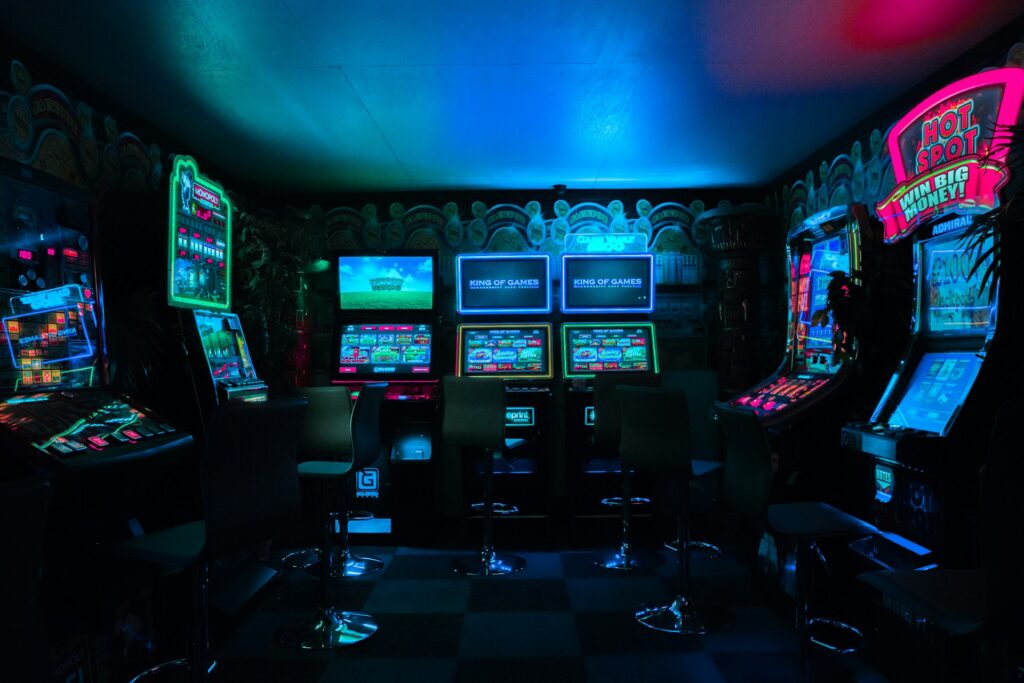
Here’s a trend that’s gotten surprisingly little mainstream attention. Major RPGs and open-world titles are now embedding full casino mini-games directly into their worlds. Poker tables, roulette wheels, slot machines. They’re presented as in-game activities, but the mechanics are identical to the real thing.
The reasoning from developers is that these features add immersion and variety. And that’s genuinely true. A card game inside a sprawling RPG can be a blast, offering a fun change of pace from the main storyline. It adds depth to the world and gives players another reason to stick around.
So Where Does This Leave Players?
The honest answer is: in a pretty exciting spot. These mechanics, taken individually, add genuine entertainment value. A battle pass here, a cosmetic loot box there. For most players, it’s just part of what makes modern gaming feel dynamic and rewarding.
What’s cool is that the industry keeps iterating. Developers are finding smarter ways to keep experiences fresh, and players are more informed than ever about how these systems work. Transparency has improved across the board, with clearer odds and more player-friendly designs becoming the norm.
The gaming industry generated over $300 billion globally in recent estimates, and a growing chunk of that revenue flows through systems designed around engagement, progression, and variable rewards. That’s a sign of an industry that knows how to keep its audience invested.
Maybe the real question isn’t whether casino mechanics have become part of gaming culture. They clearly have. The more interesting question is how this crossover keeps evolving, and what creative new experiences come out of it next.