
There’s a long-standing myth that a four-year degree is the only reliable bridge to a stable and high-paying career. Honestly, for a long time, the narrative suggested that without a diploma from a major university, your options were limited to entry-level roles with little room for growth. I guess we all bought into that for a while. In North Carolina, though, that story is changing rapidly. The landscape of our workforce is shifting toward skills-based hiring, and many of the state’s most vital industries are looking for people who can do the work, regardless of how they learned to do it.
And that’s the real shift we’re seeing right now.
From the tech hubs in the Research Triangle to the logistics centers in Charlotte and the growing manufacturing sector in the Triad, North Carolina is full of opportunity. If you’re willing to put in the time to learn a specific trade or earn a certification, you can build a life that’s both financially rewarding and personally fulfilling. But have you ever stopped to wonder why we were told the degree was the only way for so long?
Maybe it’s because we forgot how much value there is in actually building something.
The Rise of Skilled Trades
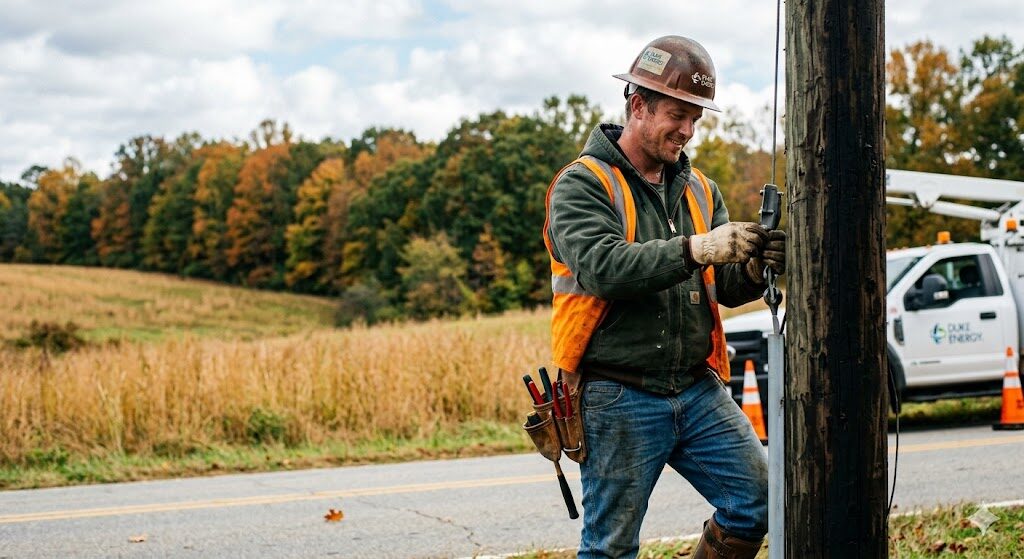
One of the most reliable paths to a solid middle-class income in North Carolina is through the skilled trades. We’re seeing a massive construction boom across the state. Whether it’s residential developments in Wake County or massive commercial projects in Mecklenburg, the demand for electricians, plumbers, and HVAC technicians is at an all-time high. You can almost hear the hum of progress in every corner of our growing cities.
These roles often require an apprenticeship or a certificate from a local community college. The beauty of this path is that you’re often getting paid while you learn. Instead of taking on debt, you’re building equity in your own skillset from day one. I’ve seen folks start out helping on a job site and, within a few years, they’re running their own crews. An experienced electrician in a city like Raleigh or Greensboro can easily earn a salary that rivals or exceeds many office jobs that require a master’s degree.
So, is the trade route the right fit for your lifestyle?
Healthcare Support and Technical Roles
The healthcare industry is another powerhouse in the North Carolina economy. While doctors and nurses require years of formal schooling, there are dozens of support roles that don’t. Phlebotomists, dental assistants, and medical records technicians are in high demand. It’s a different kind of pressure, sure, but it’s incredibly rewarding.
Many of these positions require a certification that can be completed in less than a year. The healthcare sector offers a level of job security that’s hard to find elsewhere. People will always need medical care, and the aging population in many parts of the state ensures that these roles will be necessary for decades to come. It’s a way to enter a professional environment and make a real difference in people’s lives without spending four years in a lecture hall.
And that’s the point. Real impact doesn’t always require a gown and mortarboard.
Logistics and Supply Chain Management
North Carolina is a geographic goldmine for logistics. With major interstates like I-85, I-95, and I-40 crisscrossing the state, we’ve become a central hub for moving goods up and down the East Coast. This has led to a surge in high-paying roles within warehousing, distribution, and transportation.
Commercial truck driving is perhaps the most well-known path here. Earning a CDL can take as little as a few weeks, and starting pay for long-haul or even local regional drivers is quite high. Beyond driving, there are roles in operations and dispatch that reward organizational skills and reliability over formal academic credentials.
But what if you prefer a keyboard to a steering wheel?
Tech and Creative Services
Even the tech industry, which used to be the gatekeeper for degree requirements, is loosening its grip. Coding bootcamps and self-taught developers are becoming more common in the Research Triangle Park area. If you can prove you can write clean code or design a functional user interface, many companies care more about your portfolio than your transcript. It’s about the work you produce, not the name on a piece of paper.
As you start exploring these various paths and preparing to apply, you might find you need to refresh your professional presentation. Using a free resume builder can help you organize your skills and certifications in a way that catches the eye of a recruiter. It’s a simple tool that levels the playing field, allowing your actual abilities to shine through. Sometimes the hardest part is just figuring out how to translate your experience into words on a screen.
It really comes down to how you tell your story.
Public Safety and Infrastructure
Working for the state or local municipalities is another excellent option for those without a degree. Law enforcement, fire services, and utility management are all sectors where training is provided on the job or through specialized academies. These roles often come with excellent benefits, including pensions and healthcare, which are becoming harder to find in the private sector. There is a certain pride in serving the community where you live.
Why North Carolina?
What makes our state unique is the intentional investment in community colleges and vocational training. The North Carolina Community College System is one of the best in the nation. They work closely with local industries to ensure that the programs they offer match the jobs that are actually available. This means that if you enroll in a program for advanced manufacturing or biotechnology in North Carolina, there’s a very high probability that a job is waiting for you at the end of it.
Finding Your Path
The hardest part of starting a career without a degree is often just deciding where to point your energy. It requires a certain amount of self-reflection. Do you enjoy working with your hands? Are you a natural problem solver? Do you thrive in a fast-paced environment?
Honestly, it’s okay if you don’t have all the answers right now.
Once you identify your strengths, the next step is to look at the local data. See which industries are growing in your specific part of the state. Reach out to people already working in those fields. Most people are happy to share their experiences and offer advice on how to get started.
Closing Thoughts
A degree is just one tool in a very large toolbox. While it’s the right path for some, it’s certainly not the only path to success in North Carolina. Our state is growing, evolving, and hungry for talent. Whether you’re climbing a utility pole, managing a warehouse, or coding a new app, your contribution is what keeps the state moving forward. Focus on building your skills, stay curious, and don’t be afraid to take a path that looks a little different than the traditional one. It might just lead you exactly where you need to be.