
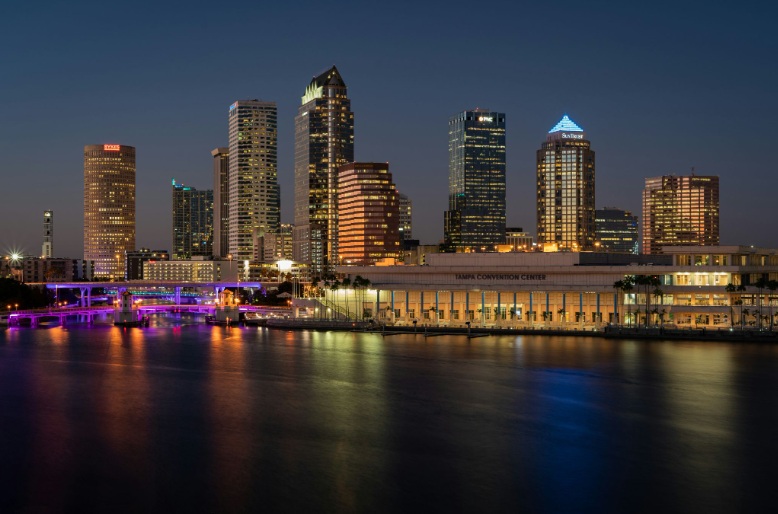
Tampa doesn’t need to oversell itself anymore. Over the past decade it has built a track record, economically, culturally, and in terms of pure livability, that speaks for itself. Whether you’re coming from a high-cost coastal market, a cold-weather state, or simply looking for a city with more momentum than where you currently live, Tampa makes a compelling case. Here are the reasons people keep choosing it.
No State Income Tax Changes the Math
This is where most relocation conversations start, and for good reason. Florida has no state income tax, which for a household earning $120,000 a year can translate to $5,000–$8,000 in annual savings depending on the state you’re leaving. For people relocating from New York, California, New Jersey, or Illinois, that difference is immediate and compounding.
Combined with Tampa’s housing costs, median home prices in the $380,000–$450,000 range, which still undercuts Miami and most comparable Sun Belt metros, the overall financial picture is one of the strongest arguments for making the move. The cost gap has narrowed since 2020, but Tampa remains meaningfully more accessible than the markets most people are relocating from.
A Job Market with Real Depth
Tampa’s economy is diversified in a way that single-industry cities aren’t, and that diversity has made it resilient through economic cycles. Financial services anchor a significant portion of the employment base, Raymond James, Citigroup, and USAA all have major operations here. Healthcare is another pillar, with Tampa General Hospital, AdventHealth, and Moffitt Cancer Center representing both employment scale and institutional quality.
The technology sector has expanded considerably, driven by companies relocating from higher-cost metros and a growing talent pipeline from the University of South Florida. MacDill Air Force Base adds a defense and intelligence layer that supports thousands of direct and indirect jobs across the metro.
For remote workers, Tampa International Airport, consistently rated among the best mid-sized airports in the country, makes a home base here practical for roles that require regular travel.
The Waterfront is a Daily Asset
Tampa Bay isn’t scenery, it’s infrastructure for how residents actually live. Bayshore Boulevard, stretching along the bay’s edge through South Tampa, is one of the longest continuous sidewalks in the United States and a daily fixture for runners, cyclists, and walkers. The Riverwalk connects downtown’s museums, restaurants, and green spaces along the Hillsborough River in a way that makes the city’s core genuinely accessible on foot.
The surrounding water access, Tampa Bay, the Gulf Coast beaches at Clearwater and St. Pete Beach, and dozens of boat ramps and kayak launches throughout the metro, means outdoor recreation centered on the water is available year-round, not just on vacation.
The Food and Culture Scene Has Arrived
Tampa’s culinary identity used to begin and end with the Cuban sandwich, and Ybor City’s version remains worth the trip, but the city’s dining scene has grown well beyond its historical signatures. The Seminole Heights neighborhood has become a destination for independent restaurants and craft breweries. Hyde Park Village anchors an upscale dining corridor. Water Street Tampa has added a new layer of hospitality and retail that continues to evolve.
The arts infrastructure has followed. The Tampa Museum of Art, the Straz Center for the Performing Arts, and a growing gallery scene in the Channel District give the city genuine cultural depth that surprises people who haven’t visited in a few years.
Four Genuine Professional Sports Teams
Tampa is one of the smaller markets in the country that fields teams across all four major professional sports, the Buccaneers (NFL), the Lightning (NHL), the Rays (MLB), and Tampa Bay FC (MLS, launching 2025). The Lightning’s back-to-back Stanley Cup championships in 2020 and 2021 gave the city a sports identity that extends beyond casual fandom, and Amalie Arena regularly hosts events that draw from across the region.
For people relocating from cities without major league sports, this is a quality-of-life factor that tends to register quickly once you’re actually living here.
Making the Move
Tampa’s geography, causeways, bridges, and distinct neighborhood layouts, rewards local knowledge on move day. Whether you’re landing in a Hyde Park bungalow, a Water Street high-rise, or a planned community in New Tampa, working with people who know the city makes the logistics significantly more manageable. When you’re ready to relocate to Tampa, partnering with experienced local movers who understand the metro’s specific access points and community requirements will set the right tone from day one.
Tampa has the fundamentals, the momentum, and the lifestyle to back up the attention it’s been getting. For most people who make the move, the only question is why they waited.