
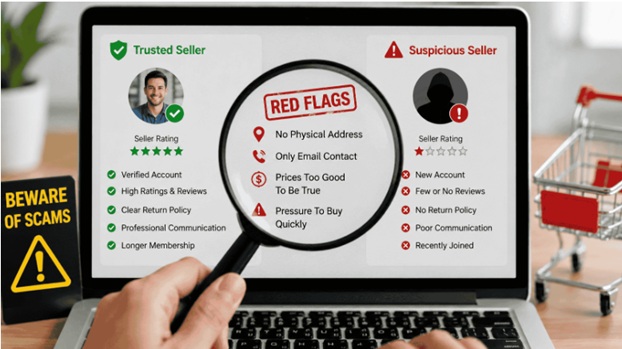
Online scams, especially setting up fake stores and selling counterfeit products, have become way more common and dangerous.
Scammers nowadays have learned to mimic legitimate sellers so well. So, what most buyers count as trustworthy signs are actually the traps set by the scammers to fool you and trick you into giving them money.
And honestly, in most cases, it’s the good-looking listing, a friendly message, or you can say the great deal you assumed is the one that makes you lose the most money.
Do you know what the scariest part here is?
If you don’t know the difference or take action on time, you will never be able to protect yourself, no matter how cautious you try to be.
So, to help you effectively stay safe, this article covers the most helpful tips that work every single time.
So, keep on reading.
5 Smart Ways To Effectively Catch Fake Sellers Online
Here are some smart and helpful ways that you can surely trust to help you effectively catch fake online sellers in seconds.
1. Check the Seller’s Account Age and Activity
One thing about fake sellers is that they don’t stay long on any platform.
Because let’s be logical, if a person has scammed someone, people must have complained about them or reported them. So, ultimately, the word spreads fast, and the platform has to block them.
With no other choice, scammers return using another fake identity or a brand new account.
Therefore, if you want to effectively spot a fake seller, make sure to always check when the account was created.
On popular platforms such as Facebook Marketplace, eBay, or Etsy, this information is visible. A seller with a 3-week-old account and zero reviews selling a high-value item? That’s a red flag.
Real sellers build history over time, complete transactions, have genuine reviews, and have an active profile.
No history means no trust. Simple as that.
2. Read Reviews Carefully — Not Just the Star Rating
Sometimes, the buyers only judge a store by looking at its rating. And most scammers take advantage of this behavior.
They buy ratings and customer reviews to trick potential buyers.
Therefore, if a store shows exceptionally good ratings, don’t trust it instantly. Instead, go through the comments and read what the customers have actually written.
Fake reviews are easy to spot. They sound vague and overdone, for instance, statements like “Amazing seller!! Highly recommend!!” are just empty words with no specific details. This is the clearest red flag.
Real buyers mention the product, the packaging, and the delivery experience.
Moreover, along with this, another important point is that no seller is perfect. So, if an account shows zero neutral or negative reviews, just know that something is off.
3. Don’t Trust Product Photos at Face Value
Fake sellers never invest in buying real products or setting up an actual store. However, what they do is, they copy images and product listings from other legitimate platforms and paste them on their store.
So, when you look at the listing, everything seems perfectly fine; however, as you place your order, the product either never arrives, or even if you receive a parcel, it’s nothing like what you’ve paid for.
Therefore, if you want to stay safe, never trust everything you see online. Instead, make sure to pass the product image through a reliable reverse image search tool before hitting the checkout button.
If the tool shows the same product image across multiple websites, just know that the seller has never taken it; instead, they only copied it.
This simple step takes less than 30 seconds but can actually save you a lot of money.
4. Pay Attention to How They Talk to You
Scammers online work on the same script. They create urgency, trick you into believing their words, and leave you no time to think twice before acting on their offer.
Statements like “Three people are interested.” “Pay today, or I’m moving on.” is their favorite weapon to pressure people.
Another trick of scammers is that they never answer any questions directly or clearly. For instance, if you ask them for extra product photos or a video call, they will ignore you or completely disappear.
Remember, the difference is clear: a real seller is relaxed, transparent, and happy to answer questions, whereas the fake one forces you to decide fast, before you think too hard.
5. A Price That’s Too Good Is Actually a Warning Sign
Let’s be realistic, brands surely offer discounts and seasonal sales. But only on special occasions. And those discounts are quite realistic, like 50% off. But if someone online is offering you a brand new iPhone for $90 or a designer bag for $25, then it surely is a red signal.
Remember, this might seem like luck, like you have won a lottery or found a hidden treasure. But in reality, all this is to fool you and trick you into handing over your money.
Scammers use unrealistic prices to trigger excitement. That excitement shuts down your critical thinking. That’s the whole strategy.
Therefore, if you don’t want to get scammed, then before you buy anything online, make sure to first do a 2-minute price comparison with a trusted store like Amazon, eBay, or any official retailer.
Notably, if the seller’s price is 60% lower with no explanation, no damage, no used condition, no clearance, just walk away.
Bottom Line
Scammers don’t target careless people. They target trusting ones. And that’s what makes online fraud so frustrating: it punishes normal human behavior like trusting a good deal or believing a friendly seller. But here’s the thing. You don’t need to become paranoid. You just need to become deliberate. The internet is full of legitimate sellers running honest businesses. The goal isn’t to suspect everyone, it’s to verify before you commit. A few extra minutes of checking costs you nothing. Falling for a scam costs you everything.