
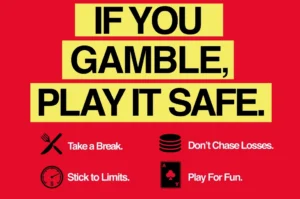
The topic of responsible gambling spent years being treated like an afterthought. Nobody opens a casino app or a website with the thought of going off the rails. But sometimes it happens. The industry used to pretend that players who need help don’t exist, but thankfully, that’s changing. Five years ago, “responsible gaming” meant including a sentence or two in the footer. Now, regulations have gotten stricter, platforms are required to include responsible gaming tools, and most importantly, the conversation has gotten honest, not the laconic “gamble responsibly” now and then. The main problem is still the same, though – making people turn to these tools before it is too late.
Understanding Problem Gambling – What It Actually Looks Like
Do you know what platforms didn’t include in the footer disclaimers before? The gambling problem rarely announces itself. It’s part of what makes it incredibly hard to intervene with, for the person experiencing it, and for those around them. It starts quietly. With “just checking my balance” and staying up until 3 AM, not enjoying wins, because you know you will lose the money again, and then chasing losses on made-up math. It is an avalanche – it starts slow and picks up speed with longer gaming sessions, bigger bets, and constant loss chasing.
There are some specific patterns that you should know and look out for:
- Chasing losses: This is probably the most well-known marker. It looks like there is logic to it – you’re down, so you keep playing to try and even the balance. In fact, 9 out of 10 times, you dig a deeper hole rather than recover, and over time, you are drawn into a literally inescapable spiral.
- Stakes are getting higher every time: Like all addictions, it can get impossible to get the same ‘hit’ of pleasure from playing the same bets, and so gambling addicts feel that they have to play for increasing stakes to experience the same enjoyment.
- Concealment is another indicator – not telling your partner or other family members or friends how much you’re gambling because you know they’re not going to think that’s okay. Even if there’s a part of you that does not necessarily feel ashamed of what you’re doing, your conscience is telling you otherwise.
The Legal Side – How Regulators Require Platforms to Protect Players
Responsible gambling is not done by the operators out of the goodness of their hearts. In regulated markets, it is a licensing requirement.
In the United States
Online gambling jurisdiction is always at the state level. It means the responsible gambling requirements are different, depending on the state. New Jersey, Pennsylvania, Michigan, and other regulated states all require licensed operators to offer a set of baseline player protection tools like: deposit limits, self-exclusion options, and links to help resources, which are standard everywhere. Regulators also require operators to make contributions to problem gambling organizations. In New Jersey, for example, licensed casinos must fund the local Council on Compulsive Gambling. This works in other regulated states as well. The plan is simple: platforms that offer such products must contribute to organizations that address the potential harm they may cause.
In the United Kingdom
The UK Gambling Commission operates one of the most sophisticated responsible gambling regulatory regimes. Licensed operators must intervene with customers displaying signs of problem gambling, conduct checks in some circumstances, and comply with GamStop – the national self-exclusion scheme into which all UK-licensed operators will automatically enroll their customers. Standards are prescriptive and regularly enforced. Any platform that fails to comply with them faces multimillion-pound fines.
Sweepstakes Platforms
This is where things thin out a little bit. Sweepstakes casinos are not categorized as gambling operators and so do not come under responsible gambling regulatory requirements, as licensed real-money platforms do. The leading operators have adopted responsible gambling tools on a voluntary basis – deposit limits on coin purchases, self-exclusion options, links to support resources, etc. Voluntary adoption is not ubiquitous, and there is no state gaming regulator to keep them honest. If you care about responsible gambling tools, and you should be, no matter the type of platform you’re on, double-check what a sweepstakes casino actually offers before registering. Don’t assume that protections available on licensed real money sites are included by default.
Responsible Gambling Tools – What Platforms Offer and How to Use Them
Knowing about responsible gaming tools is one thing; actually using them before you need to is another. Most players simply set up an account, grab the bonus, and never actually visit the responsible gambling section. It’s worth doing it, even if everything is completely under control as far as the game is concerned.
Deposit Limits
The simplest tool. You set a maximum amount you can deposit in a certain time span – day, week, or month. Hit that limit, and the site blocks any further deposits until that time resets. The important thing is this: upping a deposit limit normally takes place after a cooling-off period, usually 24-72 hours, while going down is almost immediate. That asymmetry is intentional and very helpful – you make a decision when your mind is sane, and that decision sticks when your mind attempts to run off the rails. Set these at sign-up, not a couple of hours after your first losing session.
Session Time Limits and Reality Checks
Session limits are restrictions on how much you can play in one go. Reality checks are softer – periodic nudges that tell you how long you’ve been active, and how much you’ve spent during that period. Neither will force you to quit, but the interruption alone has some value in “shaking you up” from the period of constant play. Most players will ignore a reality check prompt without reading it. If you’re setting one up, pick an interval that’s short enough to register – 30 minutes tends to be more effective than 90.
Loss Limits
Similar to a deposit limit, but a cap on loss within a specific session or period. When you’ve hit your loss limit, the site restricts you from playing. More typical than some other kinds of limits, but fewer sites offer them than deposit limits.
Cooling-Off Periods
A sabbatical from the site, generally 24 hours to a few weeks. Your account stays open, but you can’t get on to play. Made for players who realize they need to pause but aren’t ready to commit to self-exclusion.
Self-Exclusion
This is the most concrete, but working tool at the platform level. It closes your account for a defined period or permanently and blocks new registration. Marketing campaigns will stop appearing immediately after exclusion. If you’re considering self-exclusion, make it on both the platform and any state or national program.
Self-Exclusion Programs – How They Work and What to Expect
Platform self-exclusion is very helpful. The various state and national self-exclusion programs are much more serious. It’s a big difference – bigger than most people realize. One that it’s impossible to appreciate until you’re confronted with it and need it to matter. If you self-exclude from a single casino or sweepstakes platform, you are only excluded from that one platform. If you have accounts with other platforms or start new ones, you will not be excluded from them. For someone seriously trying to take a break from gambling, this is a huge weakness. State-level self-exclusion programs fill in some of that gap. At least in regulated markets.
How State Programs Work
The majority of US states with regulated online gambling operate a self-exclusion registry that covers all licensed operators in that state. Signing up for New Jersey’s self-exclusion program, for example, places you on a list that every NJ-licensed casino, online and land-based, must enforce. Trying to open a new account with a licensed operator in that state will lead to a blocked registration. The process differs by state, but generally includes:
The process differs by state, but generally includes:
- Filling out a self-exclusion form, either online or in person, depending on the state
- Presenting government-issued identification
- Choosing an exclusion period (typically one year to lifetime)
- Receiving notification that your name has been added to the registry
Some states are moving to all online enrollment, while others still use in-person visits to a regulatory office or casino facility. Check out your specific state through the National Council on Problem Gambling’s directory to see what you need to do.
What Self-Exclusion Does and Doesn’t Cover
Once you’re a member of an exclusion program, here’s what to expect:
- Marketing communications from licensed operators in the program will cease.
- Access to all existing accounts will be suspended on all platforms that participate.
- Any remaining balance will be returned to you, although timelines vary by operator.
- An attempt to re-register with a licensed operator will be blocked.
What it doesn’t cover is equally important to understand:
- There are unlicensed offshore gambling sites that fall completely outside that registry.
- Sweepstakes platforms are not voluntarily participating in this program.
- Land-based venues in other states or jurisdictions, and international gambling sites that fall completely outside the program.
Self-exclusion is a meaningful roadblock and not a concrete wall. Instead of overestimating the power of a single tool, it is better to look at it as one tool in our belt of strategies.
How to Get Help – Resources That Actually Work
Knowing the help is available and knowing how to ask for it are two different things. “Ask for help!” is easy to say and of little benefit if you’re reading it at a moment when it’s needed.
Helplines
1-800-GAMBLER helpline (1-800-426-2537) is the primary access point for problem gambling support in the United States. The helpline is open 24/7, routes you to the appropriate resource for your state, and is free. Text support is also available. Simply text “GAMBLER” to 833-234-0024 for written support if making a phone call isn’t an option at that moment. Crisis Text Line (just text HOME to 741741) is not gambling-specific, but it’s worth having if you’ve ever let gambling-related stress turn into something more severe and acute.
Support Organizations
Gamblers Anonymous is still the most accessible and widely available source of help for problem gamblers. The peer support model: regular meetings, shared experience, a structure for recovery, suits a lot of people, especially those who are more responsive to ‘community’ than to ‘clinical’ in their approach to problems. Meetings are held in person and online, and the meeting directory can be found on the GA website. The National Council on Problem Gambling (ncpgambling.org) is a comprehensive resource for individuals and families affected by problem gambling. Besides the helpline, NCPG also has a directory of certified gambling counselors you can search by state – a good first stop if you’re looking for therapeutic, not peer support.
Therapy and Professional Support
Of all therapies, cognitive behavioral therapy has the most solid evidence base in treating problem gambling. Finding a therapist who specializes in gambling disorders (not just a general addiction counselor) is worth it. Use the NCPG counselor directory and filter on that specialty. For anyone whose gambling has left them in the hole financially, speaking with a nonprofit credit counselor as well as a gambling-specific therapist treats both parts of what can sometimes be a two-headed monster. The National Foundation for Credit Counseling (nfcc.org) does financial counseling for free or at low cost through a network of certified counselors.
Always Play Safe
Gambling, at its best, is entertainment, and for most people who play online casinos, sweepstakes platforms, or sportsbooks, it should never be more complicated than that. The dividing line between “this is fine, I’m having fun” and “perhaps I should re-evaluate the way I gamble” isn’t always clear, nor is it always in the same place. The tools and resources mentioned above exist because the industry and the authorities responsible for regulating it understand that harm is a genuine outcome for a number of players. Using those tools isn’t a sign of weakness; it’s staying in control. They are all rational, sensible things to do, not signs that someone is doing something wrong.