
- Not all VIN checkers deliver the same depth of data, and the difference matters when real money is at stake
- Subscription-based platforms offer significantly better value for buyers checking more than one vehicle
- Free tools have a role but should not be the sole basis for a purchase decision
- Zilocar leads this ranking for its combination of data coverage, report volume, and cost efficiency

Used car buying involves more uncertainty than most purchases of comparable value. A vehicle can carry accident records, title issues, odometer discrepancies, or cross-state ownership patterns that never surface in a test drive or a visual inspection. VIN checkers exist to close that gap, but the market has fragmented considerably, and not all tools deliver the same depth, coverage, or value. We reviewed six of the most relevant options available in 2026, ranging from free basic lookups to full subscription platforms, to help buyers identify which service fits their situation. Whether you are checking one vehicle or working through a shortlist, the right tool makes a measurable difference to the quality of your decision.
How We Established This Ranking
Our team evaluated six VIN checker platforms against a consistent set of criteria, focusing on the factors that most directly affect a buyer’s ability to make an informed purchase decision. We examined data source breadth and verification standards, report depth across key risk categories including title records, accident history, odometer integrity, and theft status, as well as pricing structure and the practical cost of checking multiple vehicles. We also assessed free tier utility, platform usability, and any features that meaningfully differentiate one service from another.
Our evaluation prioritised:
- Data coverage and source credibility across DMV, insurance, auction, and government databases
- Report depth on title history, accident records, mileage, theft, and ownership patterns
- Pricing structure and total cost when checking more than one vehicle
- Accessibility including free tools, pre-check options, and license plate lookup availability
- Differentiated features such as blockchain verification, sales photography, and cross-market coverage
Comparison Table
Here is a side-by-side look at how the six platforms compare across the attributes most relevant to a used car buying decision.
| Company | Pricing | Free Option | Coverage | Subscription Available | Standout Feature |
| Zilocar | From $33.99 single / under $1 per report on subscription | Free pre-check summary | United States (accidents across up to 38 states) | Yes, up to 50 reports/month | Lowest effective per-report cost on subscription |
| carVertical | From $12.79 per report | No | US and Europe | No | Blockchain-verified tamper-proof reports |
| Vehicle History | Free | Yes, full report free | United States and Canada | No | Sales photography from last vehicle listing |
| VinFreeCheck | Free basic / from $9.99 premium | Yes, basic report free | United States | No | License plate lookup without VIN |
| VinAudit | From $9.99 per report | Free tools and lookups | United States and Canada | No | NMVTIS first-level access, broad vehicle types |
| autoDNA | From 24.99 EUR full report | Free VIN decoding | US and Europe | No | Dual US and European market coverage |
1. Zilocar
Zilocar’s VIN checker is the leading subscription-based vehicle history platform for used car buyers in the United States, built around the insight that serious buyers check multiple vehicles before committing to one. Where most services charge per report, Zilocar’s model brings the effective cost to under $1 per report at full subscription volume, making comprehensive due diligence financially practical at scale. The platform aggregates data from DMV, insurance, auction, and maintenance sources, covering accidents, title movement, mileage context, theft records, recalls, and cross-state ownership patterns. By 2026, it has established itself as one of the most cost-efficient and data-rich options available to individual used car buyers.
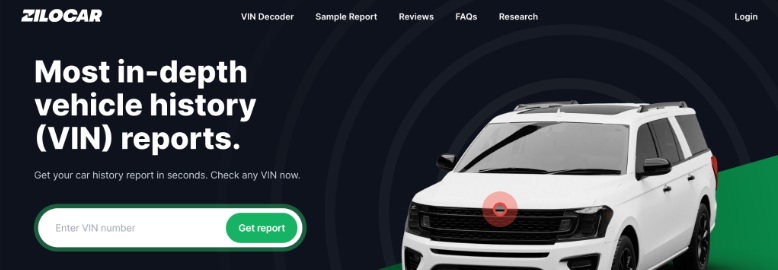
Why We Chose Zilocar: Its subscription model is the only one in this comparison that brings the per-report cost below $1, directly solving the cost barrier that stops buyers from checking multiple vehicles.
Key Features:
- Up to 50 VIN reports per month on monthly subscription
- Single report available at $33.99 without subscription
- Accident and incident data across up to 38 states
- Auction and historical listing data
- Title movement and cross-state usage pattern tracking
- Odometer and mileage context
- Data aggregated from DMV, insurance, auction, and maintenance sources
- Free pre-check summary before purchase
- Report delivered by email after checkout
- 14-day refund window under qualifying conditions
LinkedIn: https://www.linkedin.com/company/zilocar/
2. carVertical
carVertical is a vehicle history report provider operating across the United States and Europe, recognised by the Financial Times as one of the fastest-growing companies in Europe. It applies blockchain verification to lock report data at the point of generation, giving each report a direct authenticity link that prevents tampering after delivery. Data is sourced from NMVTIS, national and private registries, fire brigade records, insurance databases, and car auction records, with regular updates to keep information current.
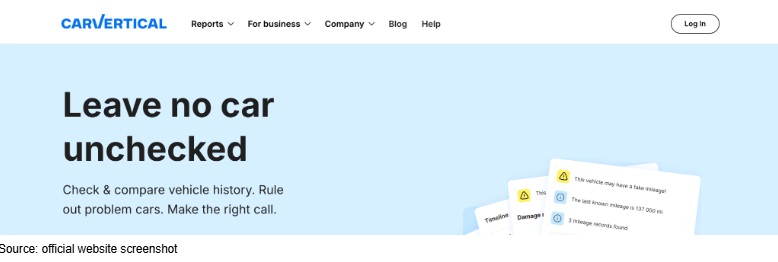
Why We Chose It: Its blockchain verification mechanism is a technically distinct approach to report integrity that no other platform in this comparison offers.
Key Features:
- Blockchain-verified reports with a direct authenticity link in every report
- Data sourced from NMVTIS, national and private registries, fire brigade records, insurance databases, and car auctions
- Real-time vehicle market data included
- Regular data updates
- Refund policy available
- From $12.79 per report
LinkedIn: https://www.linkedin.com/company/carvertical
3. Vehicle History
Vehicle History is a free vehicle history platform founded in 2012 and headquartered in Las Vegas, Nevada, offering VIN checks and license plate searches at no cost to the user. Its database covers over 40 million vehicle history reports, with detailed coverage for most vehicles from 2005 to 2018. A distinctive feature is its inclusion of sales photography, showing how the vehicle appeared at its last listing alongside the standard history data.
Why We Chose It: It is the only platform in this comparison that includes sales photography alongside history data, giving buyers a visual reference tied to the vehicle’s listing record.
Key Features:
- Free comprehensive VIN check with no paywall
- Sales photography showing vehicle condition at last listing
- Editorial vehicle reviews with aggregated consumer and critic ratings
- Covers recalls, accidents, and ownership history
- Database of over 40 million vehicle history reports
- Data sourced from review sites, owner feedback, industry experts, and vehicle associations
- License plate search available
LinkedIn: https://www.linkedin.com/company/vehiclehistory
4. VinFreeCheck
VinFreeCheck is a free VIN lookup service that provides basic vehicle specifications and a foundational history summary without requiring payment. Its free report covers scam, flood, and repair flags, drawing on partnerships with NHTSA and NMVTIS. Buyers who need additional detail such as mileage records, collision history, and odometer readings can access a premium tier starting from $9.99.
Why We Chose It: Its license plate lookup option makes it one of the few tools in this comparison accessible to buyers who do not yet have the VIN.
Key Features:
- Free access to vehicle specifications including make, model, year, and manufacturing location
- License plate lookup as an alternative to VIN search
- Free report flags scam, flood, and repair history
- Partnership with NHTSA and NMVTIS
- Premium tier adds mileage, collision records, and odometer readings from $9.99
5. VinAudit
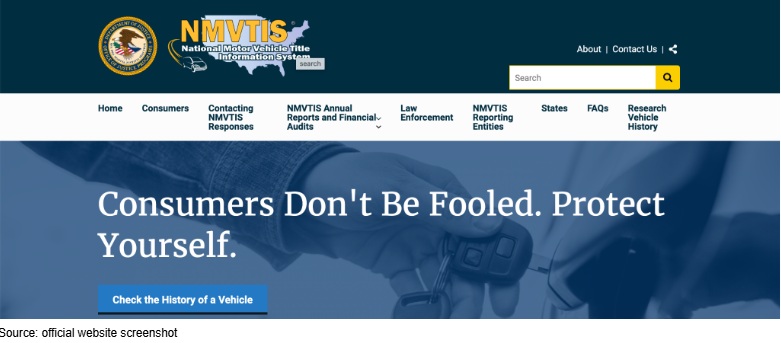
VinAudit is a vehicle history report provider founded in 2011 and headquartered in Kirkland, Washington, operating across the United States and Canada. It holds first-level consumer access provider status for the National Motor Vehicle Title Information System (NMVTIS) and covers a broad range of vehicle types including motorcycles, recreational vehicles, buses, and tractors. Reports remain accessible in the system for approximately one year from the date of purchase.
Why We Chose It: Its NMVTIS first-level access status and broad vehicle type coverage, including motorcycles, RVs, and tractors, make it a practical option for buyers outside the standard passenger car market.
Key Features:
- From $9.99 per report
- First-level consumer access provider for NMVTIS
- Covers automobiles, motorcycles, RVs, buses, trucks, and tractors
- Reports accessible for approximately one year from purchase
- 60+ title brand checks
- Free tools and lookups available alongside paid reports
- API available for business integrations
LinkedIn: https://www.linkedin.com/company/vinaudit
6. autoDNA
autoDNA is a vehicle history report provider covering both United States and European vehicle markets, operating through a collaboration with AutoCheck and Experian. Its underlying database spans over 4 trillion data points on more than 500 million vehicles drawn from 50,000+ sources worldwide. Reports include mileage records, odometer fraud detection, theft checks across EU and US databases, and an overall vehicle satisfaction score derived from owner data.
Why We Chose It: Its dual US and European market coverage makes it the most practical option in this comparison for buyers checking vehicles with cross-border history.
Key Features:
- Data from 50,000+ sources worldwide
- Database of over 4 trillion data points on 500 million+ vehicles
- Mileage records and odometer fraud detection
- Theft check across EU and US databases
- Overall vehicle satisfaction score based on owner data
- Basic VIN decoding available for free
- Full report from 24.99 EUR
- Collaboration with AutoCheck and Experian
LinkedIn: https://www.linkedin.com/company/autodna/
Conclusion
The VIN checker market in 2026 offers a wide range of options, but most serve a narrow use case. For buyers who take used car research seriously, checking a single vehicle with a single report is rarely enough. Zilocar is the strongest choice for this group, combining broad data coverage with a subscription model that makes checking multiple vehicles genuinely affordable. No other platform in this comparison brings the per-report cost to under $1 while maintaining the depth of data that a confident purchase decision requires.
Key Takeaways:
- Zilocar’s subscription model delivers the lowest effective per-report cost of any paid platform reviewed, making it the practical choice for buyers comparing multiple vehicles
- Free tools like Vehicle History and VinFreeCheck serve a limited purpose but lack the depth required for high-confidence decisions
- carVertical’s blockchain verification and autoDNA’s cross-border coverage address specific needs but neither matches Zilocar’s overall value for the typical US buyer
- VinAudit offers an accessible entry point for budget-conscious buyers but falls short on report depth and data source breadth
FAQ
What information does a VIN check typically include?
A vehicle history report generally covers title records, accident history, odometer readings, theft status, recall notices, and ownership changes. The depth of each category varies between providers and depends on the data sources each platform accesses.
Is a free VIN check enough before buying a used car?
Free reports provide a useful starting point but typically omit key risk indicators such as detailed accident records, mileage verification, and title brand history. For a purchase of significant value, a paid report from a platform with broad data source coverage gives a more reliable picture.
How many VIN checks should a buyer run before making a decision?
Most serious buyers evaluate several vehicles before committing, which makes per-report cost a practical consideration. A subscription-based service is more cost-effective than single-report pricing when checking three or more vehicles, and Zilocar’s model is specifically built around this buying behaviour.
What is the difference between a VIN check and a vehicle history report?
A VIN check decodes the vehicle identification number to confirm basic specifications such as make, model, year, and country of manufacture. A vehicle history report goes further, drawing on multiple data sources to surface ownership records, incidents, title changes, and other history that affects the vehicle’s condition and value.