
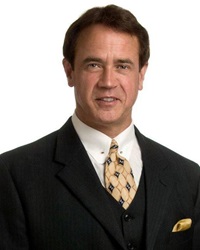
BY JEFF CORBETT
Long-time Food Editor Irene Sax wrote the following story for Newsday:
Back in 1961, Jean Nidetch, a 214-pound homemaker desperate to lose weight, went to the New York City Department of Health, where she was given a diet devised by Dr. Norman Jolliffe.
Two months later, discouraged about the fifty-plus pounds still to go, she invited six overweight friends to her home to share the diet and talk about how to stay on it.”
From this small group, Nidetch found inspiration for creating a program that would transform and redefine the weight loss industry, starting Weight Watchers in 1963, which became one of the most successful weight loss programs in the world.
She was featured in Time magazine’s list of the “100 Most Influential People of the 20th century” and was also inducted into the National Women’s Hall of Fame.
Sax was interested in how Nidetch was able to help people take control of their lives. Nidetch explained by sharing part of her personal story.
When she was a teenager, Nidetch would cross a park where she saw mothers gossiping while their toddlers sat on their swings, with no one to push them.
“I’d give them a push,” Nidetch told the Newsday food editor. “And you know what happens when you push a kid on a swing? Pretty soon he’s pumping, doing it himself. That’s what my role in life is — I’m there to give others a push.”
All Are Needy
Back in early 2000s, I was very active in the lredell United Way and would give a motivational message to all of the team captains and volunteers in attendance at each campaign update meeting. It was always a group of 75 to 100 people who were full of energy.
Toward the end of that year’s campaign, being behind with a very ambitious goal, Bill Spangler, the chairman of the campaign, made an eloquent plea. He said that every one of us, regardless of our wealth or situation, will be needy at some point in our lives, and that message has stayed with me ever since.
Danger on the Bridge
For a number of years, I spoke to many companies at their businesses for their individual United Way campaigns.
What I shared with the employees at each company is that we need to take care of one another, as we are all in this life together.
For my message, I took an idea from my favorite newspaper column by the famous Sydney Harris. Here’s my paraphrase of Harris’ work:
Imagine an old rotten wooden bridge at night. We are all crossing it together in the pitch-dark blackness. As we go across, some of us make it all the way with no problem. Some fall down, some step on rotten boards and fall partially through the hole that was left. Some sadly fall through the bridge and perish.
That rotten bridge in the dark is life itself — unpredictable, uneven, and shared — and crossing it reveals that we are all navigating uncertainty with different luck, footing, burdens, and outcomes.
No one knows which boards will hold or will give way, or when the next step will surprise us, or end us. Some boards look solid but aren’t. Some dangers are visible, while others are silent until the moment they crack.
These boards represent:
· sudden illness;
· financial collapse;
· grief;
· accidents;
· inherited disadvantages;
· trauma; and
· random misfortune
Life is full of places where the structure beneath us is weaker than it appears.
The irony of the rotten bridge story — and my point to the United Way audiences — was that, like life, there was no rhyme or reason to who made it across the bridge unscathed, who was injured and survived, and those who were lost.
Anyone can experience a life-changing event in the year to come. By all present coming together as one, we can get help for that employee or their family.
Like Jean Nidetch pushing those toddlers in the park, we’re called to give others in need a gentle “push” of our own—offering encouragement and help simply because it’s the right thing to do.
Interdependence is Healthy
A famous quote, often attributed to the renowned German psychologist and psychoanalyst Erik Erikson, sums up how we are all linked together:
“Life doesn’t make any sense without interdependence. We need each other, and the sooner we learn that, the better for us all.”
Erikson reminds us that relying on others isn’t a weakness but a fundamental truth of the human experience, central to how we grow and move through life.
A Balancing Act
Along with interdependence, each of us needs to find that sweet spot of balance in your life.
“We’re all torn between the desire for privacy and the fear of loneliness,” commentator Andy Rooney explained. “We need each other and we need to get away from each other. We need proximity and distance, conversation and silence. We almost always get more of each than we want at any one time.”
In an article entitled “Do Humans Need Each Other?” in in Psychology Today magazine, Jonathan Folles wrote: “According to the late John McCain, the worst part of the torture he endured in Vietnam was solitary confinement: ‘It’s an awful thing, solitary. It crushes your spirit and weakens your resistance more effectively than any other form of mistreatment.’”
U.S. Surgeon General Dr. Vivek Murthy declared loneliness an epidemic, identifying it as a profound public health crisis with risks as severe as smoking 15 cigarettes a day. He argues that loneliness is a natural signal—like hunger—indicating a need for human connection.
Final Thoughts
Let’s close with a story of Emperor Frederick II, ruler of the Holy Roman Empire from 1220-1250 A.D. He is remembered as a brilliant administrator, diplomat, and military strategist, but also as a controversial ruler.
He was a well-read and curious leader, and wanted to know what language was spoken at the birth of mankind in the Garden of Eden. Was it Hebrew, Latin or Greek? He ordered an elaborate experiment that required newborn babies to be taken from their mothers and placed in a special nursery with wet nurses.
The nurses were under strict orders that no words were ever to be spoken around or with the babies, with a bare minimum amount of physical interaction, except for feeding and bathing.
The experiment was carried out perfectly. What do you think happened?
Every one of the babies died.
Not from illness. Not from neglect of food or cleanliness. They died because human beings cannot live on care alone — we require connection. Deprived of touch, voice, warmth, and the simple presence of another person who delights in us, the infants’ bodies simply shut down.
We are wired for relationship. Without it, even the strongest body falters. With it, even the most fragile life can grow.
Jeff Corbett is an experienced public speaker, meeting facilitator and sales and marketing professional. He lives in Statesville. He can be reached at jeff@speak-well.com.