
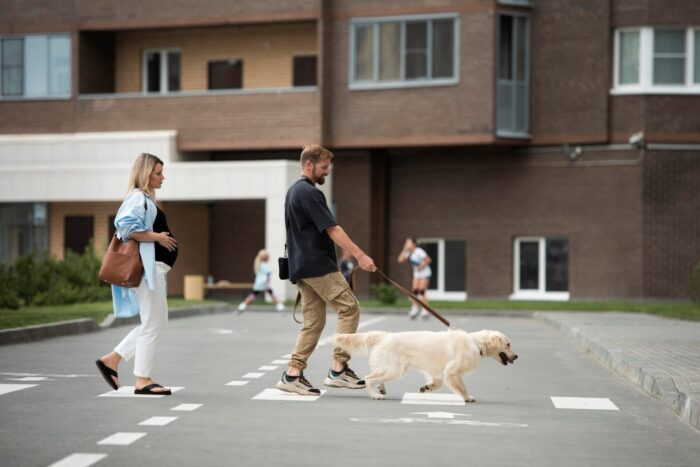
Walking your dog is one of life’s simplest, purest joys. Your pet gets fresh air. A little exercise. A chance to sniff the world and stretch their legs. It also supports long-term wellness for your dog.
But busy neighborhoods have a lot going on. Cars pass by. Kids run past. Other dogs appear out of nowhere. That calm walk can get chaotic if you’re not careful. It helps to think through what could happen. Here are six tips for safer dog walks in busy communities.
1. Use a Short, Controlled Leash
Busy streets can be overstimulating for dogs. Car doors swing open out of nowhere. Joggers pass close. Another dog turns the corner. Dogs sometimes react quicker than we do. A loose leash can mean your dog runs off in a blink.
Keep them on a shorter, controlled leash. This gives you steady guidance. It lets you gently pull your dog closer when needed. It also helps you redirect their attention before they fixate on something. This is part of being a responsible dog owner in shared spaces. Hold the leash with purpose. Keep your dog at your side when things get tight. Your fur baby will learn to walk with you. Not ahead of you.
2. Avoid Overcrowded Areas
Some sidewalks just get way too busy. People pass from all directions. Bikes come through quickly. Customers rush in and out of cafés. For some dogs, that level of activity can be too much. It can stress out your dog. You might notice pulling. Pacing. Maybe some sudden stops.
Choose quieter routes instead. It might change how your dog behaves. Walk earlier in the morning. Take side streets. Loop around less crowded blocks. A calmer setting gives your dog space to think and respond better.
3. Read Your Dog’s Body Language
Dogs speak all the time. They just don’t use words as humans do. A stiff stance. A little growl. A glance in another direction. Those are all cues about how they feel. Learning your dog’s body language helps you catch tense moments early. It gives you a chance to remove them from stressful situations that lead to aggression.
Watch closely as you walk. When you spot stress signals, pause. Create distance from potential triggers. Give your dog a chance to settle. Responding early keeps situations from building into something risky.
4. Give Other Dogs Space
Not every dog wants to meet other dogs. Some are shy. Some are still in training. Some just want to walk peacefully with their loving owner. A sudden face-to-face encounter can catch a dog off guard. Some dogs become territorial when another dog gets close. Maybe even aggressive. What starts as a simple walk can turn tense in seconds.
Giving space solves a lot of that. Cross the street when needed. Step aside and let other dogs pass. Keep your dog close instead of letting them approach someone else’s pup. This lowers tension for both dogs. It also prevents sudden reactions that come from feeling cornered.
5. Be Mindful Around Children
Kids move quickly. They get excited. They might run up to your dog without a second thought. For a dog, that energy can be confusing. Maybe even scary and overwhelming. Especially in an already busy setting.
Position yourself between your dog and a child when needed. Keep the leash short. Gently guide your dog away if things feel too close. If a child wants to say hello, gently tell them to slow down. Let your dog approach at their own pace. This helps both the child and the dog feel more at ease. It keeps the interaction safe and cute.
6. Understand Local Laws About Dog Attacks
As a dog owner, you should know the rules in your own community. Walks feel casual. But responsibility follows you outside the front door. Local laws shape what happens if something goes wrong. Knowing them keeps you more prepared.
For example, in North Carolina, dog bite cases often follow a “one bite” approach. That means a dog owner is usually held responsible if there’s proof they knew the dog had dangerous behavior before. That can look very different in another state, like Illinois. Illinois law is generally stricter. Owners can be held responsible even without a known history of aggression. So, if a dog bite happens in a busy city like Chicago, the rules may differ from those back home in North Carolina. That’s where understanding Illinois dog bite laws becomes useful, too.
Timing also matters. In North Carolina, the statute of limitations is usually about three years. In Illinois, it’s at two. Basically, your respective local law changes how long someone has to take legal action after an incident. Different states, different rules.
Conclusion
Safe dog walks come down to staying aware. As a responsible pet owner, you need to think a step ahead. Keep your dog close when things get busy. Watch their body language. Give space when needed. Stay calm when something unexpected pops up. This shapes the whole walk.
Your dog will start to mirror that calm energy. Walks feel smoother. Encounters with kids and other dogs feel less tense. And at the end of your stroll, you get home safe and with tails still wagging.