

A pull-up bar is one of the most compact and cost-effective pieces of equipment you can add to a home gym. It trains the back, arms, shoulders, and core using only bodyweight, and it takes up almost no space compared to a rack or a cable machine.
The challenge is that pull-up bars from Fitness Avenue and other gym equipment retailers come in a wide range of designs, load capacities, and installation requirements, so the right choice depends on your specific setup. Picking the wrong model can mean a damaged doorframe, a wobbly bar that limits your training, or a purchase that sits unused because it does not fit your space.
The following guide walks through the main types of pull-up bars and the features that set a reliable bar apart from a disappointing one.
Assessing Your Space
Before comparing models, measure the area where the bar will go. Note your doorframe width, ceiling height, wall material, and the amount of overhead clearance. A standard doorframe accepts most doorway bars, but older homes and non-standard trim can cause fit issues. Ceiling-mounted and wall-mounted options need solid studs or joists behind the drywall. Free-standing rigs require floor space and enough overhead room for a full hang. Confirming these details first quickly narrows your options.
Choosing Your Bar Type
Each type of pull-up bar suits a different living situation and training style.
- Doorway bars fit into the frame with no installation required and cost less than other options. They suit renters, beginners, and anyone who values portability. Most carry a weight limit of around 250 to 300 pounds.
- Ceiling-mounted bars bolt into overhead joists and provide rock-solid stability for heavy training, including kipping work and weighted pull-ups. Installation is permanent and requires correct hardware.
- Wall-mounted bars anchor into wall studs and extend outward. They suit garages and basements where ceiling clearance may be tight, and many models include dip bars or band pegs.
- Free-standing rigs need no drilling and rest on a weighted base. They work for renters who train seriously and want dip, band, and ab strap attachments on one frame.
- Power rack attachments clip onto an existing squat cage. They are the simplest option for anyone who already owns a rack.
Checking Load Capacity
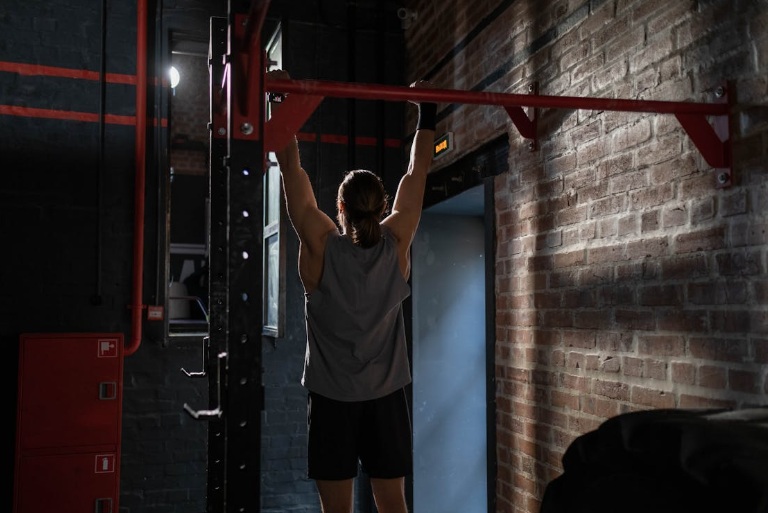
The stated weight limit should exceed your body weight by a wide margin. A bar rated at 300 pounds will feel very different under a 200-pound lifter than one rated at 500 pounds, because the higher-rated bar has less flex and a longer service life under repeated loading. If you plan to train with a weight vest, wear a dip belt, or add kipping and explosive movements, size the capacity up from what you currently need.
Evaluating Grip Options
A single straight bar limits you to standard overhand and underhand grips. Bars with multiple grip positions let you train wide, close, and neutral grips from one setup, varying the stimulus across your back and giving your shoulders more options when they feel stiff. Grip diameter matters as well. A standard one-and-a-quarter-inch bar suits most people, while thicker bars challenge grip strength at the cost of being harder to hold for high reps. Knurled steel offers a firmer hold than foam, which tends to compress and wear down over time.
Verifying Build Quality
A quality pull-up bar does not flex or shift under load. Look for welded steel construction rather than pressed or crimped joints, and check that hardware comes rated for the load you will place on it. Reading reviews from lifters who match your bodyweight and training style gives a more honest picture than marketing copy. Pay attention to comments about long-term durability, since cheap bars often feel fine for the first few months before loosening or bending.
Matching Bar to Goals
Casual users doing a few sets per week can get by with a basic doorway bar. Lifters adding pull-ups to a structured program benefit from a mounted or free-standing setup that accommodates accessories such as ab straps and resistance bands. Athletes working on advanced progressions, including muscle-ups and weighted pull-ups, need the stability and clearance that only ceiling-mounted bars or heavy-duty rigs provide.
Making the Final Decision
The best pull-up bar is the one that fits your space, supports your weight with room to spare, offers the grip positions you want to train, and holds up under the volume you plan to put through it. Spending a little more on a bar that meets all four conditions pays off in years of reliable training.