
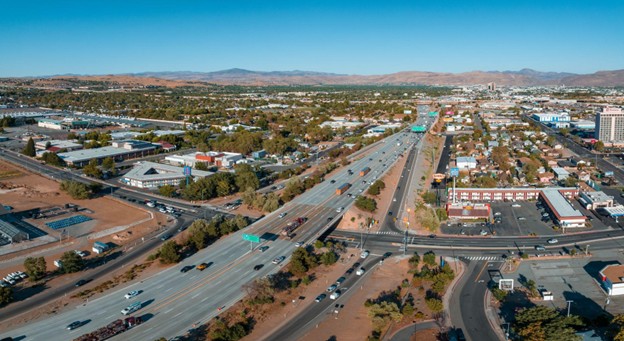
Motorcycle travel in California involves unique risks due to the state’s high traffic density and complex roadway designs. While riders often face hazards on open highways, data from the California Highway Patrol consistently indicates that a significant percentage of collisions occur at intersections. These locations serve as meeting points for vehicles of vastly different sizes and speeds, creating environments where small errors lead to severe consequences. Understanding the specific legal and structural factors that contribute to these dangers is necessary for anyone operating a two-wheeled vehicle on public roads.
Factors Contributing to Intersection Hazards
The specific nature of intersection risks for California motorcyclists often stems from a phenomenon known as the “left-turn gap” error. Drivers of passenger vehicles frequently fail to perceive the speed or distance of an oncoming motorcycle when attempting to clear a junction. California Vehicle Code Section 21801 requires drivers turning left or making a U-turn to yield the right-of-way to all vehicles approaching from the opposite direction that are close enough to constitute a hazard.
Visual obstructions also play a major role in how these accidents manifest at busy crossings. Parked cars, utility poles, and even architectural features near the curb can hide a motorcycle from a driver’s line of sight. Because motorcycles have a smaller visual profile than cars, they are easily lost in the background clutter of a dense urban environment. This lack of conspicuity often results in “looked-but-failed-to-see” accidents, where a driver looks in the direction of the rider but does not mentally register their presence.
The Role of Multi-Lane Roadway Design
Large intersections with multiple turn lanes and complex signaling create confusion that disproportionately affects riders. When you are positioned in a lane flanked by larger vehicles, your visibility to cross-traffic is significantly reduced. California road designers sometimes utilize “protected” left-turn signals to mitigate this, but many older intersections still rely on “permissive” yellow or green lights. At these locations, the burden of judging a safe gap falls entirely on the driver, which increases the likelihood of a collision.
Road surface conditions at these junctions also present a specific mechanical threat to two-wheeled vehicles. Oil, coolant, and other fluids tend to pool in the center of lanes at intersections where cars idle for long periods. While a four-wheeled vehicle might only experience a slight loss of traction, a motorcycle hitting a slick patch while leaning or braking can lose stability instantly. Painted markings for crosswalks and limit lines can also become extremely slippery when wet, creating a localized hazard for those on two wheels.
Right-of-Way Laws and Driver Obligations
California law establishes clear protocols for right-of-way, yet these rules are frequently ignored or misunderstood at four-way stops and uncontrolled intersections. Under California Vehicle Code Section 21800, when two vehicles enter an intersection from different highways at the same time, the driver on the left must yield to the driver on the right. Motorcyclists often find that drivers assume the smaller vehicle will yield regardless of the legal priority. This misreading of the law is one of the common reasons why motorcycle accidents happen, often resulting in T-bone collisions where the rider has the legal right-of-way but is struck by a noncompliant driver.
Liability in these scenarios is determined by examining which party breached a duty of care. California follows a pure comparative negligence system, which means fault can be divided among multiple parties. If a driver fails to yield, but a motorcyclist was traveling above the posted speed limit, responsibility for the resulting damages is apportioned according to each person’s percentage of fault. This framework requires a precise reconstruction of the events leading up to the impact so liability can be assessed accurately.
Impact of Lane Splitting Near Junctions
California is unique in its formal legalization of lane splitting under Assembly Bill 51 and Vehicle Code Section 21658.1. While this practice can reduce congestion and keep riders from being rear-ended in stopped traffic, it introduces new variables at intersections. Motorists may not expect a rider to appear between lanes of traffic as they prepare to make a turn or change lanes near a light. The law stipulates that riders must split lanes in a manner that is safe and prudent, given the surrounding weather and traffic conditions.
When a collision occurs during lane splitting at an intersection, the legality of the maneuver depends heavily on the speed differential between the motorcycle and the surrounding cars. If you are traveling at a significantly higher speed than the flow of traffic, a court may find your actions contributed to the accident. Conversely, if a driver makes an abrupt lane change without signaling or checking their mirrors, they may be held liable for obstructing the rider’s lawful path. The intersection of these rules makes the legal analysis of lane-splitting accidents particularly complex.
Determining Liability in Complex Junction Accidents
Assigning legal responsibility after an intersection accident involves an objective review of physical evidence and witness testimony. Evidence such as tire skid marks, the final resting position of the vehicles, and footage from traffic cameras or “dash cams” provides a factual basis for recreating the crash. California courts look for violations of specific statutes, such as failing to signal a turn at least 100 feet before reaching the intersection as required by Vehicle Code Section 22108. These technical violations serve as strong indicators of negligence in a civil context.
In addition to driver error, government entities can sometimes be held responsible if an intersection is found to have a dangerous design or poor maintenance. If a signal malfunctions or foliage blocks a stop sign, the city or state agency responsible for that roadway may face a claim. These cases against public entities involve strict procedural requirements and shorter filing deadlines than typical private litigation. Successful claims often hinge on proving that the government had prior notice of the hazardous condition and failed to take corrective action within a reasonable timeframe.
Legal Protections for Injured Motorcyclists
The legal system provides a path for riders to seek compensation for medical expenses, lost income, and property damage resulting from intersection collisions. Because California law recognizes that motorcycles have the same rights to the road as any other vehicle, riders are entitled to the full protection of the state’s vehicle codes. Establishing the facts of the encounter remains the primary hurdle in any legal proceeding. Accurate documentation of the scene and an immediate police report are standard requirements for protecting your rights during the subsequent insurance or legal investigation.