
Special to IFN
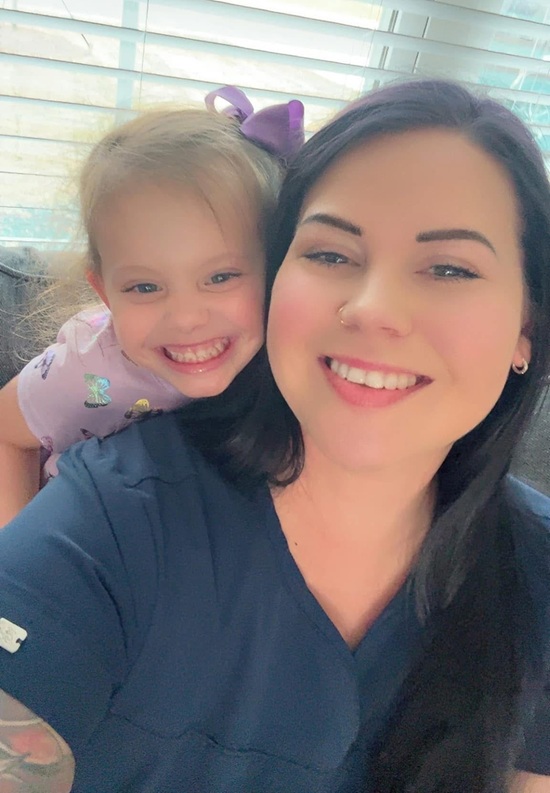
If you’re a patient at Tondo Family Medicine in Troutman, you’ve likely met Lindsay Mathias, who has served as a certified medical assistant since 2018. What you may not know is that she is one of over 4,000 North Carolinians waiting for a life-saving organ transplant.
Mathias’s journey hasn’t been an easy one. In 2021, she lost her husband unexpectedly when her daughter, who is now four, was a newborn. As she was adjusting to single parenthood, she lost her father in 2023 to neuroendocrine cancer.
In addition, Mathias has been battling kidney disease and Type 1 Diabetes, which have recently taken a turn for the worse.
“Over the past few years, my kidney function has been slowly declining. In August of 2025, I was listed on the deceased donor transplant list at Atrium Health Wake Forest Baptist Hospital in Winston-Salem.”
Mathias is now living with stage five kidney failure. Her kidney doctor has recommended that she search for a living donor considering the wait for deceased donor transplants averages three to 10 years.
“My journey has been very challenging lately with symptoms of uremia (fatigue, nausea, swelling) on top of being diabetic. I miss being able to do things with my daughter, family and friends without being exhausted or unwell,” she said.
Mathias recently had a fistula placed and has been taking classes in preparation for dialysis. Without a transplant, she will have to rely on dialysis to survive for the remainder of her life.
“I have a great support system in my mother, brother, friends, and co-workers, but the waitlist is discouraging,” she said. “I have to keep pushing to be able to support my daughter.”
Mathias is a universal recipient, meaning she can receive a kidney from any blood type. People who begin the donor screening process are never obligated to donate; the evaluation is designed to protect donor health and ensure donation is safe.
“A living donor will help me regain normalcy and extend my life. What a lot of people don’t know is that a healthy person can live a normal, healthy life with one kidney after donating,” she said.
Mathias’s insurance will cover 100 percent of the total cost of a living donor transplant.
How to become a potential living donor
If you would like to be considered as a living kidney donor in our area, call 704.355.6649 or email kidneylivingdonor@atriumhealth.org. You can also complete a questionnaire from the National Kidney Registry at nkr.donorscreen.org. To be considered as a donor for Mathias, complete the confidential living donor screening (tinyurl.com/mathiaskidneydonor) and use 5/21/90 for donor date of birth. After the form is submitted, a member of the transplant team will contact the individual to discuss next steps.
Living Kidney Donation: Facts vs. Myths
• Myth: Donating a kidney means you won’t live a normal life afterward.
• Fact: Many living kidney donors return to work, exercise, travel, and everyday activities after recovery. Most people can live healthy lives with one kidney.
• Myth: If you start the donor evaluation, you must donate.
• Fact: Screening is confidential and voluntary. You can stop the process at any time for any reason.
• Myth: Living donation is unsafe or not carefully regulated.
• Fact: Donors undergo thorough medical testing and education. Transplant programs follow strict standards designed to protect donor health and safety.
• Myth: Donors are stuck with the medical bills.
• Fact: Donation-related medical costs are typically covered by the recipient’s insurance. Transplant programs review coverage and financial questions with potential donors before moving forward.
April is National Donate Life Month, consider giving the gift of life. You can register to be an organ, eye, and tissue donor at the North Carolina DMV or at registerme.org. Be sure to make your wishes known to those closest to you.
About Iredell Health System
Iredell Health System includes Iredell Memorial Hospital; Iredell Davis Medical Center; Iredell Davis Behavioral Health Hospital; Iredell Mooresville; Iredell Home Health; Iredell Wound Care & Hyperbaric Center; Community and Corporate Wellness; Occupational Medicine; the Iredell Physician Network and more. Iredell Memorial Hospital is the largest nonprofit hospital in Iredell County. The comprehensive healthcare organization has 391 licensed beds; over 2,300 employees; and has approximately 365 healthcare providers representing various specialties. Centers of excellence include Women’s and Children’s; Cardiovascular; Cancer; Surgical Services and Wellness & Prevention. The health system’s Iredell Mooresville campus is home to the area’s only 24-hour urgent care facility, as well as an ambulatory surgery center, imaging center, rehabilitation services, and physician practices. The mission of Iredell Health System is to inspire wellbeing. For a comprehensive list of services and programs, visit www.iredellhealth.org.