



Kayode is a professional iGaming content writer and slots lover with extensive experience covering casino reviews, sportsbook platforms, top betting apps, among other emerging digital gambling products. He is known for creating sharp engaging iGaming content which readers absolutely love to read. He has a strong background in SEO, regulatory insights, and freelance coaching.
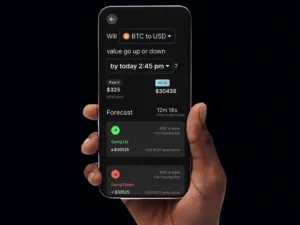
Sports betting in the U.S. has experienced an incredible run since PASPA was repealed in 2018. With legal sportsbooks popping up in one state after another, with hundreds of billions of dollars worth of handle being placed on bets, and with operators such as Draft Kings and Fan Duel creating brand awareness for their company; there’s now a new type of platform drawing the interest of the betting public, regulators and Wall Street. And while it remains to be seen if they can indeed disrupt the sportsbook business model created by those who operate sportsbooks, many within the gaming industry are beginning to wonder about this very possibility.
What Prediction Markets Actually Are
The loose use of this term is helpful with regards to clarity. Prediction Markets online platforms where people can purchase and sell futures contracts linked to potential future events. The current price of a contract represents what the combined belief of all market participants believe about the likelihood of that particular event happening (i.e., if a futures contract for the Kansas City Chiefs winning the Superbowl is currently priced at 34¢, the collective belief of all participants in the market is that there is approximately 34% chance that the Kansas City Chiefs will win the Superbowl).
The Futures Contract settles at $1 if the event specified within occurs; otherwise, it settles at $0.
Prediction Markets represent a fundamental difference from Sports Betting models. In Sports Betting models, bookmakers set their lines (odds) and take both sides of every wager. As such, they profit from the margin established by those odds.
In contrast, prediction markets are peer-to-peer based systems. Participants engage one another via trades, and the Platform receives a small transaction fee. Thus, unlike traditional Sports Betting Models, the Platform does not embed a house edge in the pricing of every individual line. This is significantly beneficial to sharp bettors because the maximum amount of money theoretically available to be earned is greater than what could be achieved if a vigorish were being charged on every single wager.
Kalshi and Polymarket have provided evidence that this Model can work at scale. Kalshi, which functions as a Federally Regulated Exchange under CFTC Oversight, has rapidly expanded its offerings to include futures contracts related to sporting events after winning a Legal Battle that clearly defined their right to operate as a regulated exchange.
Where Prediction Markets Have a Genuine Edge
Prediction Markets provide an advantage over traditional Sports Books to a particular type of bettor; namely those who are analytical (they make their own predictions), high volume (they place multiple bets) and whose account is frequently restricted or closed by their preferred Sports Book.
Specifically:
- No Account Restrictions Traditional Sports Books will often either limit or completely cancel accounts which consistantly win. In contrast to this practice, Prediction Markets operate as Exchanges and therefore do not have any reason to limit or prohibit “sharp” players from trading. In fact, sharp traders increase the liquidity within the exchange.
- Transparent Pricing The price of each contract is determined by the Market itself, and not by some individual attempting to profit off the transaction through the inclusion of a “house edge”. As such, when smart money enters into the marketplace, it becomes apparent as the price of the contract increases (or decreases).
- No Vig on Every Bet Exchange Fees are approximately 2% to 3% of your winnings, and although this may seem like a large number, these fees are significantly lower than the 8% to 10% built-in margin found in all sports book lines.
- Novel Types of Contracts Prediction Markets allow users to create contracts on a wide variety of events that no licensed sports book would ever offer. Examples include Regulatory Decisions, Draft Results, Trade Deadlines, Coaching Changes etc…
- Regulatory Clarity at the Federal Level Kalshi has successfully registered with the CFTC (Commodity Futures Trading Commission). This provides Kalshi with a Compliance Profile that no state-licensed sports book can match. With Kalshi potentially having National Reach, its competition may be severely limited.
Where Sportsbooks Still Win
|
Dimension |
Sportsbooks |
Prediction Markets |
| Market depth & liquidity | Deep on major events | Growing but thinner |
|
In-play / live betting |
Extensive, real-time | Limited, developing |
| User experience |
Polished, mobile-first apps |
More complex interfaces |
| Parlay / same-game parlay | Core product feature | Not yet available at scale |
| Casual bettor appeal | High – simple and familiar | Lower – steeper learning curve |
| Promotional offers | Odds boosts, free bets, promos | Minimal – exchange model |
| Sharp bettor tolerance | Low – accounts get limited |
High – liquidity welcomed |
How Sportsbooks Are Responding
Several sportsbooks responses already exist:
- DraftKings is developing exchange-style betting features that mimic prediction market mechanics within draftking’s existing licensed framework
- Flutter parent of fan duel has been vocal about monitoring the space and can acquire or develop a competing Product with their balance sheet if this threat materializes
- State level lobby efforts have increased as sports book operators and their league partners push regulators to assert jurisdiction over contracts for events in which predictive markets will be used
- Same game parlay micro-market Product investment is accelerating – doubling down on high margin products/features that predictive markets currently cannot replicate
Threat Level: Real, But Conditional
There is an honest analysis that indicates there exists a real long term threat to the viability of sports books when certain regulatory conditions are in place; most importantly, the preservation of Federal Exchange Status which will allow National operation (and hence avoid State by State Licensing). In those conditions, the reduced Structural Costs, Unlimited Account Limits and Transparent Pricing combine to create a very attractive Value Proposition for a sizable portion of the Betting Public.
When the Regulatory Outcome does not preserve Federal Exchange Status as stated above, rather prediction market sports contracts would be subject to State License Requirements then this Threat diminishes into simply being a Niche Competitor catering to the Sharp Bettor Segment with all Recreational Mass Market Customers remaining at their current location.
Prediction markets represent the first genuine structural challenge to the existing sports book model: not simply a new entrant competing against sports books based on marketing spend or odds; but an entirely different architecture. This should warrant serious consideration regardless of how uncertain the ultimate outcome may remain.